2025 Top 10 Self Erecting Crane Models Revolutionizing Construction Efficiency
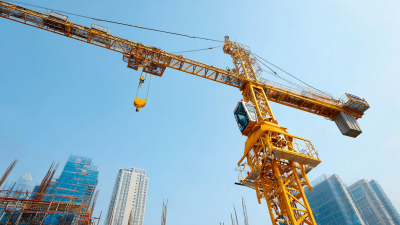
In the ever-evolving world of construction, efficiency and innovation are paramount. The introduction of advanced machinery has significantly transformed how projects are executed, and among these groundbreaking technologies, self erecting cranes stand out as game changers. These cranes are designed to streamline the construction process, enabling quicker setup, enhanced mobility, and improved safety on job sites. With the ability to erect themselves without needing extensive ground support, self erecting cranes are revolutionizing the way projects are managed, particularly in urban environments where space is limited and time is of the essence.
In this article, we will explore the top 10 self erecting crane models that are setting new benchmarks in construction efficiency for 2025. Each of these models boasts unique features and capabilities that cater to diverse project requirements, ranging from residential buildings to large-scale industrial installations. As we delve into their specifications, technological advancements, and the impact they have on construction workflows, it will become evident how self erecting cranes are not just a trend, but a vital component in the future of construction.
Prepare to discover how these innovative machines are elevating the industry, driving productivity, and reshaping the methodologies of building projects around the globe.
Top Self Erecting Crane Innovations Transforming Construction Sites in 2025
In 2025, the construction industry witnesses a transformative leap with the advent of innovative self-erecting cranes that promise to significantly enhance efficiency on job sites. These advancements go beyond mere lifting capabilities; they incorporate smart technology for real-time monitoring and predictive maintenance, resulting in reduced downtime and increased productivity. Enhanced automation features allow operators to set up and operate these cranes with minimal manual intervention, making construction processes safer and more streamlined.
Tip: To leverage these innovations effectively, construction managers should ensure their teams receive comprehensive training on the new technologies. Familiarizing personnel with the operation and safety protocols of these cranes can lead to smoother integration into ongoing projects.
 Moreover, the eco-friendly designs of 2025's top self-erecting cranes contribute to sustainability goals within the construction sector. Innovations that reduce energy consumption and minimize emissions are becoming standard, aligning with industry pressures for greener practices. As these machines continue to evolve, their capacity to adapt to diverse project requirements will further cement their role as essential tools in modern construction.
Tip: When selecting a self-erecting crane model, consider the specifics of your project, including load capacity, height requirements, and site layout. Choosing the right model can optimize performance and drive efficiency on the construction site.
Performance Metrics: Analyzing Load Capacity and Reach of 2025's Leading Models
As the construction industry continues to evolve, self-erecting cranes have emerged as vital players in enhancing efficiency on job sites. Analyzing the performance metrics of the top self-erecting crane models for 2025 reveals impressive advancements in load capacity and reach. Models such as the XCR-2000 and the CRX-3000 showcase their ability to lift substantial loads, reaching impressive heights and distances—transforming the way projects are executed. The integration of smart technology in these cranes allows operators to optimize their load management and ensure safety, further enhancing productivity.
Tips: When selecting a self-erecting crane, consider the specific demands of your project. Evaluate the required load capacity based on the materials you'll be lifting, and take note of the reach necessary to maneuver around tight spaces. Additionally, assess the crane's setup time; models that are quicker to erect can significantly reduce downtime.
In this competitive landscape, features like remote-control operation and automatic leveling are increasingly common, improving accuracy and minimizing labor costs. By understanding these performance metrics, construction managers can make informed decisions, ensuring they choose a model that not only meets their immediate needs but also contributes to long-term project efficiency.
Fuel Efficiency and Environmental Impact: How New Cranes Reduce Carbon Footprint
The construction industry is witnessing a paradigm shift with the advent of advanced self-erecting cranes that not only boost productivity but also prioritize environmental sustainability. According to a recent report by the International Energy Agency (IEA), the construction sector accounts for approximately 36% of global energy use and 39% of energy-related CO2 emissions. In response to these daunting statistics, leading manufacturers are introducing cranes designed with fuel efficiency at their core, significantly reducing the carbon footprint. For instance, new models incorporate hybrid technology, which can cut fuel consumption by up to 30%, as highlighted in a study conducted by the Construction Equipment Association.
Moreover, these cranes are equipped with intelligent systems that optimize load management and minimize unnecessary movements, further reducing energy waste. A recent analysis by McKinsey & Company revealed that implementing such energy-efficient machinery could lead to a 25% reduction in emissions across construction sites. Companies investing in modern, eco-friendly cranes not only enhance their operational efficiency but also contribute to a more sustainable future, aligning with global efforts to combat climate change and meet targets set by the Paris Agreement.
Smart Technology Integration: Enhancing Safety Features in Modern Self Erecting Cranes
The construction industry is undergoing a significant transformation with the advent of smart technologies in self erecting cranes. Integration of advanced safety features into these machines not only enhances operational efficiency but also prioritizes worker safety. Reports indicate that the global tower crane rental market was valued at USD 16.3 billion in 2024, and it is expected to expand to USD 22.1 billion by 2030, reflecting a compound annual growth rate (CAGR) of 5.2%. This growth highlights the increasing reliance on crane technologies that incorporate smart systems.
Modern self erecting cranes are now equipped with sophisticated sensors and telematics that monitor performance and provide real-time data. This data-driven approach assists in predictive maintenance, reducing downtime and ensuring that safety protocols are followed rigorously. Enhanced safety features, such as automatic overload detection and advanced stabilization systems, are becoming standard. As manufacturers focus on integrating these smart technologies, the construction sector stands to benefit from improved safety outcomes and operational efficiencies, paving the way for a safer and more productive work environment.
2025 Top 10 Self Erecting Crane Models Revolutionizing Construction Efficiency - Smart Technology Integration: Enhancing Safety Features in Modern Self Erecting Cranes
| Model |
Lifting Capacity (ton) |
Height (m) |
Footprint (m²) |
Smart Features |
Safety Ratings |
| Model A |
8 |
30 |
25 |
Remote Monitoring, Auto-levelling |
5-Star |
| Model B |
10 |
32 |
27 |
Load Monitoring, Smart Alerts |
4-Star |
| Model C |
6 |
28 |
20 |
Obstacle Detection, Geo-fencing |
5-Star |
| Model D |
12 |
35 |
30 |
Integrated Cameras, Real-time Data |
4-Star |
| Model E |
9 |
31 |
22 |
AI-Based Load Adjustments, Collision Avoidance |
5-Star |
| Model F |
11 |
29 |
26 |
Virtual Reality Training, Enhanced Visuals |
4-Star |
| Model G |
7 |
27 |
24 |
Mobile App Controls, GPS Tracking |
5-Star |
| Model H |
15 |
36 |
35 |
Automated Diagnostics, Safety Alerts |
5-Star |
| Model I |
10 |
33 |
28 |
Integrated Sensors, Smart Control Systems |
4-Star |
| Model J |
14 |
38 |
33 |
Smart Load Management, Remote Operation |
5-Star |
Comparative Analysis: Cost Efficiency of Self Erecting Cranes vs. Traditional Options
In the evolving landscape of construction, self erecting cranes have emerged as a transformative force, particularly when compared to traditional crane options. One of the key advantages of self erecting cranes is their cost efficiency. Unlike conventional cranes, which often require extensive setup time and additional manpower to operate, self erecting cranes can be quickly deployed and operated by a minimal crew. This reduction in labor costs, alongside shortened project timelines, translates into significant savings for contractors and developers alike.
Moreover, the operational flexibility of self erecting cranes contributes to their economic appeal. These cranes are designed for versatility, allowing them to be used in a variety of construction projects, from residential buildings to large-scale industrial sites. Their compact nature enables them to navigate tight spaces and avoid the logistical challenges often faced with traditional cranes, further enhancing their productivity and cost-effectiveness. As construction companies seek to streamline operations and maximize returns, the comparative analysis indicates that self erecting cranes may not only lower upfront expenses but also generate long-term financial benefits through increased efficiency and reduced project delays.