
2026 Best Types of Construction Cranes for Global Buyers?
Choosing among construction cranes in 2026 is not simply a matter of comparing lifting capacity or purchase price. Global buyers must match the machine to the site, load, schedule, climate, and available service support. Tower cranes may suit high-rise projects, while mobile cranes offer faster relocation between prepared work areas. Crawler cranes provide stability on demanding ground, and rough-terrain cranes can reach isolated sites with limited access.
Crane-safety educator Ron Overton is often credited with the practical warning, “A crane is only as safe as its setup.” That principle remains relevant. A 100-ton crane can still be unsuitable if its ground bearing pressure exceeds the site’s capacity. Wind exposure, boom length, counterweight configuration, operator visibility, and inspection quality also affect real performance. Small details matter.
This guide examines the best types of construction cranes for global buyers in 2026. It considers lifting range, mobility, fuel or electric systems, maintenance access, digital monitoring, and total ownership cost. It also discusses how regional standards and local technicians may influence the final decision. Experienced buyers know that brochures rarely show the full operating picture. They can hide downtime, transport restrictions, and difficult spare-parts logistics.
There is no perfect crane.
A careful selection process should include verified load charts, manufacturer documentation, service records, and site-specific engineering advice. Some recommendations may still need revision after a physical inspection. That is not a weakness. It is a realistic part of responsible crane procurement.
Construction Crane Basics and Their Role in Modern Building Projects
Construction Crane Basics and Their Role in Modern Building Projects
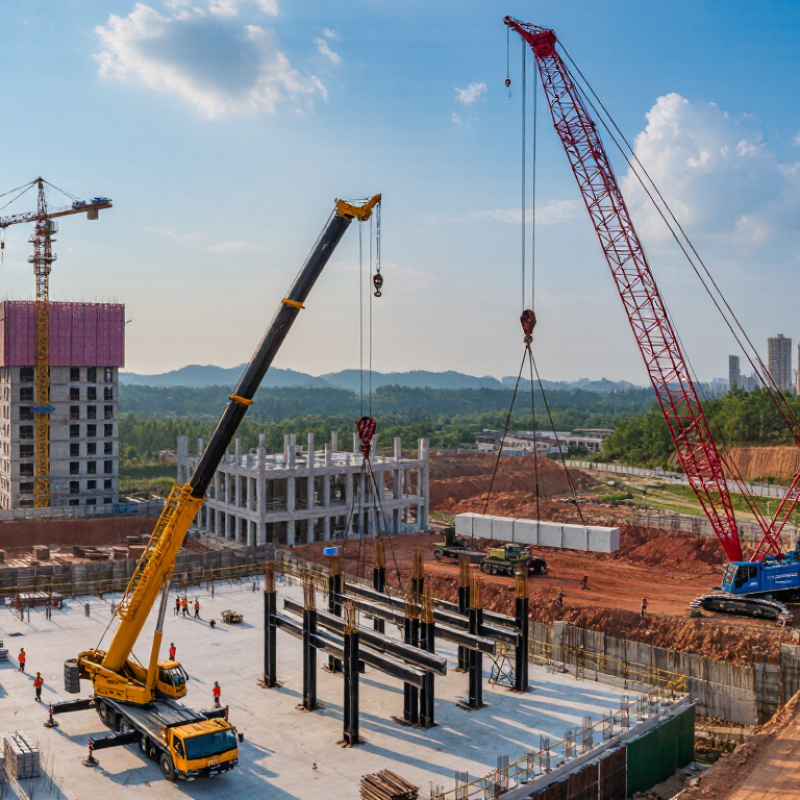
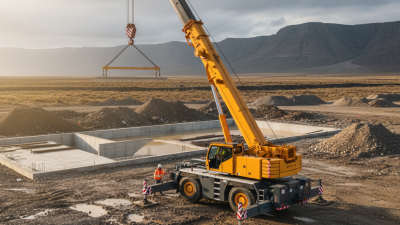
Construction cranes turn heavy materials into reachable, controlled loads on modern building sites. Their basic role is simple: lift, move, and place materials safely. Tower cranes suit tall buildings and tight urban plots. Mobile cranes offer flexible setup across roads, bridges, and industrial projects. Crawler cranes work well on soft ground because their tracks spread pressure. Rough-terrain cranes handle uneven sites, but their lifting radius needs careful review. Each type changes the project’s rhythm, cost, and risk profile.
From practical site planning experience, crane selection should begin with load charts, ground conditions, wind exposure, and access routes. A concrete panel may weigh several tonnes, while its long shape catches wind unexpectedly. Engineers also check maximum radius, hook height, foundation needs, and transport limits. A cheaper crane can become expensive after delayed deliveries or extra ground reinforcement. I have seen schedules fail because teams measured load weight but ignored turning space. That mistake is common. It deserves more attention.
Tips: Match the crane to the heaviest planned lift, not the average load. Inspect lifting accessories before every shift. Keep exclusion zones clear and visible. Record wind readings and stop operations when site limits are reached. Ask an independent lifting professional to review the plan. Digital planning helps, but it cannot replace a trained signaler watching the load. Small details matter.
2026 Best Types of Construction Cranes for Global Buyers? - Construction Crane Basics and Their Role in Modern Building Projects
Comparative guide to common construction crane types, operating characteristics, and suitable project applications
| Crane Type | Mobility and Setup | Typical Rated Capacity | Typical Maximum Working Height | Typical Horizontal Reach or Boom Length | Best-Suited Projects | Main Advantages | Key Limitations and Buying Considerations |
|---|---|---|---|---|---|---|---|
| Tower Crane | Fixed base or climbing configuration; assembled on site and usually anchored to a foundation or structure | 4–20 tonnes | 50–100 m; higher with building ties and additional mast sections | 30–80 m jib length | High-rise buildings, residential towers, commercial complexes, and large urban construction sites | Excellent height, precise positioning, large site coverage, and efficient lifting over long project durations | Requires engineering, foundation preparation, erection and dismantling planning, wind monitoring, and sufficient site space |
| Mobile Telescopic Crane | Road-mobile carrier with telescopic boom; normally travels between sites and sets up with outriggers | 10–500 tonnes | 20–100 m, depending on configuration | 20–100 m telescopic boom, often extendable with a lattice or hydraulic jib | General building construction, infrastructure work, equipment installation, maintenance, and short-term lifting operations | Fast deployment, flexible positioning, and broad capacity range | Requires adequate ground bearing capacity, transport access, outrigger clearance, and careful load-chart planning |
| Crawler Crane | Mounted on crawler tracks; travels on site with the boom installed but is usually transported in separate sections | 40–3,000 tonnes | 30–120 m, depending on boom and jib arrangement | 30–150 m lattice boom systems are common | Heavy industrial construction, bridges, power facilities, wind-energy components, precast structures, and large infrastructure | High lifting capacity, strong stability, and reduced reliance on outriggers during lifts | High mobilization cost, significant transport requirements, large working radius, and possible ground-pressure concerns |
| Rough-Terrain Crane | Four-wheel-drive crane designed for off-road travel; uses outriggers for lifting operations | 10–100 tonnes | 20–60 m | 20–60 m telescopic boom | Infrastructure, bridge work, industrial sites, remote projects, and construction areas with uneven or undeveloped ground | Good maneuverability on uneven terrain, compact dimensions, and rapid on-site setup | Usually not intended for long-distance road travel while fully configured; lift capacity decreases as radius increases |
| Truck-Mounted Crane | Crane mounted on a conventional road truck chassis; travels efficiently between locations | 5–100 tonnes | 15–60 m | 15–60 m telescopic boom | Urban construction, utility work, building material delivery, small structural lifts, and maintenance contracts | Good road speed, low relocation time, and relatively simple logistics for multiple job sites | Needs stable ground and outriggers; road regulations, axle loads, and site access can limit deployment |
| Loader Crane | Hydraulic crane installed on a truck or carrier; commonly loads and unloads materials from the vehicle | 1–30 tonnes | 8–30 m | 6–25 m hydraulic boom reach | Timber, masonry, roofing materials, steel delivery, prefabricated components, and short-duration site handling | Combines transport and lifting, reducing the need for a separate crane for smaller loads | Limited capacity and reach compared with dedicated mobile cranes; truck stability and payload must be checked together |
| Overhead Bridge Crane | Runs on elevated runway beams inside a permanent building or industrial structure | 5–500 tonnes | 6–20 m lifting height, depending on building clearance | Typical building spans of 5–40 m | Factories, precast yards, warehouses, workshops, shipbuilding areas, and manufacturing facilities | Efficient repetitive lifting, accurate load movement, and excellent use of indoor floor space | Not portable between sites; building structure, runway alignment, headroom, and maintenance access are critical |
| Gantry Crane | Supported by legs that run on ground rails or rubber tires; may be fixed or movable | 5–300 tonnes | 6–30 m under the girder | 10–50 m span; longer systems are possible for specialized yards | Precast concrete yards, ports, shipyards, steel storage areas, and large outdoor assembly zones | Suitable for outdoor lifting, good load stability, and effective coverage of defined work areas | Requires a level travel path, rail or pavement preparation, and sufficient clearance for legs and end trucks |
| Derrick Crane | Fixed or guyed mast-and-boom system; commonly assembled on rooftops or confined construction sites | 5–100 tonnes | 20–100 m, depending on mast and guying arrangement | 15–60 m boom length | Urban high-rise construction, rooftop lifting, dismantling work, and sites where a conventional tower crane is difficult to install | Can operate in restricted spaces and may be installed on existing structures with suitable engineering | Needs carefully designed anchorage and guying; lower operating speed and specialized installation requirements may apply |
| Data note: Capacity, height, reach, and span figures are representative industry ranges rather than limits for every model. Actual performance depends on the load chart, boom configuration, counterweight, wind conditions, ground bearing capacity, foundation design, applicable local regulations, and the manufacturer’s engineering documentation. | |||||||
Related Posts
-
2026 How to Choose the Right Construction Cranes for Your Project?
-
10 Essential Tips for Choosing the Right Construction Cranes
-

10 Best Types of Construction Cranes for Efficient Project Management
-

Top 10 Best Truck Cranes for Heavy Lifting in 2026?
-
Why is a Luffing Crane Essential for Modern Construction Projects?
-
10 Best Rough Terrain Cranes for Challenging Jobs?