Best Telehandler Forklift Types for Your Construction Needs?
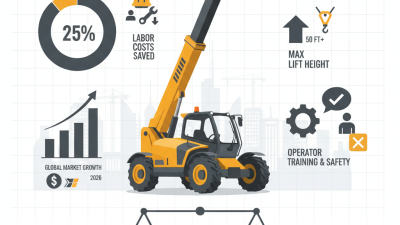
The construction industry is evolving rapidly, leading to increased demand for efficient equipment. One essential machine in this sector is the telehandler forklift. According to a report by MarketsandMarkets, the global telehandler market is projected to grow at a CAGR of 6.4% from 2020 to 2025. This growth is driven by the need for versatile equipment on job sites.
Telehandler forklifts offer numerous advantages. They can lift loads to significant heights and navigate rough terrains. They are designed for versatility, allowing the attachment of different tools. However, choosing the right type of telehandler forklift can be challenging. Many operators may not fully understand their capabilities. This can lead to underutilization or incorrect use, which can impact project timelines.
Understanding the specific needs of your construction project is crucial. Some telehandlers excel in high-lift operations while others are better suited for tight spaces. Evaluating factors like load capacity, lift height, and attachments is vital. In a market where efficiency drives success, selecting the right telehandler forklift can make all the difference.
Types of Telehandler Forklifts: A Comprehensive Overview
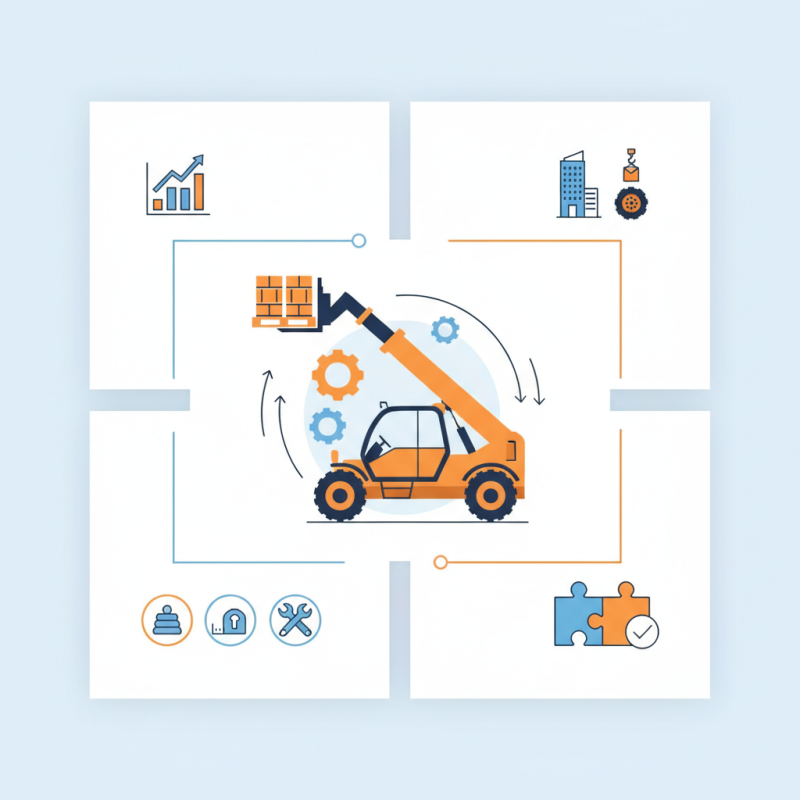
Telehandler forklifts are essential on construction sites. They offer versatility that traditional forklifts cannot match. Understanding the types of telehandler forklifts is crucial for making the right choice for your construction needs.
There are primarily two types: fixed-frame and rotating telehandlers. Fixed-frame models have a set lifting height and reach. They excel in straightforward tasks. A rotating telehandler, however, allows for 360-degree rotation. This flexibility is invaluable in complex projects. According to a 2022 market report, rotating telehandlers have seen a 15% increase in demand, reflecting their growing popularity among builders.
Tip: Assess your project’s requirements before choosing a telehandler. Consider factors such as lift height and machine width. These can significantly affect your workflow and efficiency.
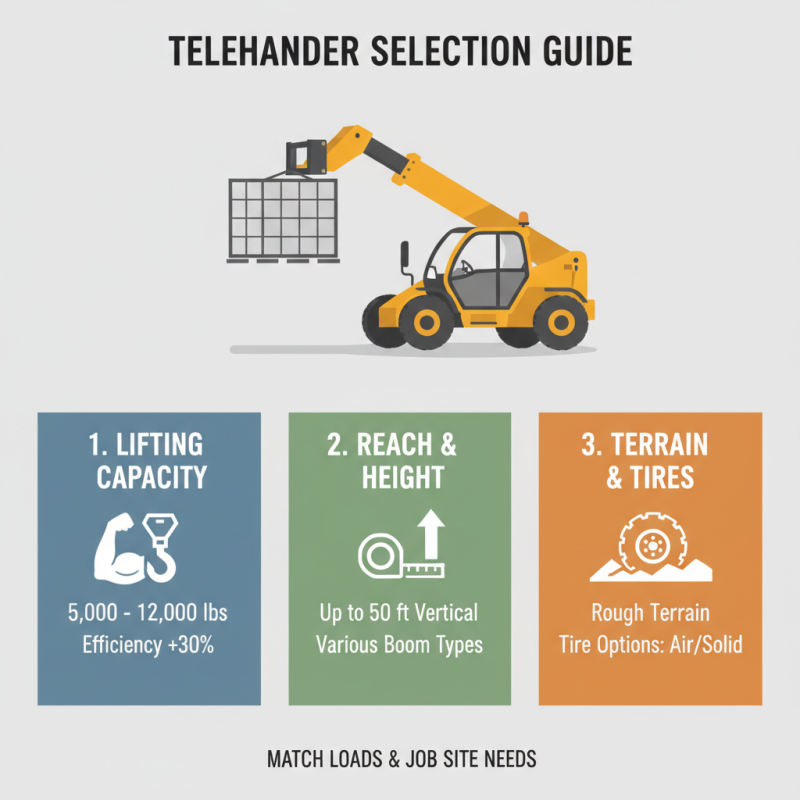
Another aspect worth pondering is the weight capacity. Most telehandlers range from 5,000 to 12,000 lbs. An operator might misjudge the load, risking safety. Therefore, always verify weight limits before lifting.
Tip: Regular training for operators can prevent accidents. Understand the machinery to maximize safety and efficiency on-site.
Understanding the specific use of each type can save you time and money. This knowledge allows you to select the right equipment for your projects.
Best Telehandler Forklift Types for Your Construction Needs
This chart illustrates the most commonly used types of telehandler forklifts in the construction industry based on their lifting capacity and usage frequency.
Key Features to Consider When Selecting a Telehandler
When selecting a telehandler, multiple features warrant attention. Lifting capacity is critical. Most telehandlers can lift between 5,000 to 12,000 pounds. According to industry reports, optimizing lifting power can increase efficiency by up to 30% on job sites. This means you should know your typical loads and select accordingly.
Maneuverability is also essential for tight spaces. Many models come with all-wheel drive and adjustable wheelbases for better handling. A study from the Construction Industry Institute highlights that poor maneuverability can lead to increased project delays. Thus, ensuring a telehandler can navigate your site is vital.
Another aspect is attachment compatibility. Some telehandlers work with a variety of attachments like forks, buckets, and hooks. This versatility can reduce the need for additional equipment. Yet, using a telehandler for unsuitable tasks can cause safety hazards. Always assess if the attachments will serve your specific tasks effectively. Selecting the right telehandler requires thorough consideration of these features to ensure maximum productivity.
Comparative Analysis of Popular Telehandler Models
When choosing a telehandler, understanding the different models is crucial. Compact telehandlers are excellent for tight spaces. They often offer a good lift height and stability. However, they may lack the power needed for heavier tasks. Think about what you really need. Is space more critical than lifting capacity?
On the other hand, high-capacity telehandlers can handle heavier loads. They excel on larger sites, where strength is essential. But, they can be cumbersome. Maneuvering in confined areas might become challenging. Operators may find themselves frustrated by their size. Flexibility is vital, but larger units often lack it.
Mid-sized models strike a balance. They offer decent lifting capabilities without sacrificing maneuverability. They're easier to operate in various environments. You might still face challenges with heavy loads. Always consider how the equipment fits into your workflow. Selecting the right model is more than just numbers; it's about real-world application.
Assessing Lifting Capacity and Reach for Construction Projects
When selecting a telehandler forklift for construction, lifting capacity and reach are crucial factors. According to industry reports, many projects require lifting capacities of at least 5,500 pounds. However, this number can vary based on specific needs. For instance, heavy materials, like steel beams, often demand higher capacities. Choosing the right model is not merely about numbers; it involves understanding the demands of each task.
Reach is equally important. Telehandlers can extend up to 56 feet in some cases. This capability allows for elevated work, like placing materials on rooftops. Yet, with higher reach often comes stability concerns. Some models may struggle in uneven terrain, making it vital to assess site conditions beforehand. A common oversight is underestimating the need for adaptability. Operators should ensure that their equipment can handle diverse situations.
Furthermore, the versatility of attachments can enhance a telehandler's functionality. However, relying too heavily on attachments can lead to operational inefficiencies. Operators may need to switch tools frequently, affecting productivity. Many users report challenges in training staff on different attachments, leading to safety risks. It's a reminder that investing in a robust telehandler shouldn't overlook the importance of training and site evaluation.
Safety Standards and Best Practices for Telehandler Operation
When operating a telehandler, safety should be the top priority. Always conduct a pre-operation inspection to identify any damage or malfunctions. Check the tires, lights, and hydraulic systems. This step is critical to ensure that the equipment is ready for use. Also, keep the area clear of obstacles. Visibility is vital in construction sites.
Proper training is essential for all operators. They must understand load limits and center of gravity. Overloading can lead to tipping and serious accidents. Operators should use personal protective equipment, too. Hard hats, gloves, and high-visibility vests help minimize risk.
Moreover, communication is key on job sites. Operators should signal clearly to ground crew members. Misunderstandings can be dangerous. Regular refreshers on safety protocols also help reinforce best practices. It’s easy to become complacent, but vigilance is necessary for everyone's safety. Always be aware of surroundings. Pay attention to other machinery and workers nearby. Each of these practices contributes to safer telehandler operations.
Best Telehandler Forklift Types for Your Construction Needs
| Telehandler Type |
Max Lift Capacity (lbs) |
Max Lift Height (ft) |
Reach Distance (ft) |
Operating Weight (lbs) |
Safety Features |
| Standard Telehandler |
5,500 |
16 |
12 |
7,000 |
Stability Monitoring, Overload Protection |
| Compact Telehandler |
4,500 |
14 |
10 |
5,500 |
Enhanced Visibility, Automatic Leveling |
| Heavy-Duty Telehandler |
12,000 |
20 |
15 |
10,000 |
Complete Rollover Protection, Safety Locks |
| Rotating Telehandler |
6,000 |
18 |
12 |
8,000 |
360-Degree Rotation, Safety Sensors |