China Top Mobile Tower Crane Suppliers for Global Buyers
Choosing a reliable mobile tower crane supplier requires more than comparing prices or reading product brochures. Global buyers must examine lifting capacity, working radius, transport dimensions, wind limits, assembly procedures, and service coverage. A suitable mobile tower crane should match the project, not merely appear powerful on paper. Urban housing, bridge construction, and industrial maintenance each demand different configurations.
Crane-safety author David V. MacCollum has stated, “Planning is the key to crane safety.” This principle remains practical for international procurement. Buyers should request load charts, inspection records, operator guidance, spare-parts policies, and documented quality controls. They should also confirm whether suppliers provide installation training and responsive technical support across borders. Small details matter. A missing adapter can delay an entire site.
This guide introduces China’s leading mobile tower crane suppliers for global buyers. It considers manufacturing experience, engineering capability, export performance, customization, delivery reliability, and after-sales support. It also looks beyond polished websites. Factory audits, customer references, and independent documentation can reveal important differences. Supplier claims deserve verification.
No ranking is perfect. Project conditions change, and even experienced buyers can overlook foundation requirements or local operating restrictions. That uncertainty deserves honest attention. The strongest supplier is not always the largest one. It is the partner that communicates clearly, documents limitations, and supports safe performance from factory dispatch to final dismantling.
What Defines a Mobile Tower Crane Supplier in China
China Top Mobile Tower Crane Suppliers for Global Buyers
What Defines a Mobile Tower Crane Supplier in China
A reliable mobile tower crane supplier offers more than a competitive quotation. The supplier should understand lifting capacity, working radius, transport limits, and site conditions. Experienced teams provide load charts, foundation guidance, assembly procedures, and maintenance schedules. They should also explain how the crane performs on uneven ground or crowded urban sites. Factory quality systems matter, but practical evidence matters more. Buyers should review inspection records, weld quality controls, component traceability, and factory testing procedures. A supplier with clear technical documents usually reduces installation mistakes and delayed projects.
Tips: Ask for a complete technical file. Check test certificates, spare-part availability, and response times. Request videos or records from similar projects. Do not judge quality from photographs alone.
A professional supplier also supports communication after delivery. This includes operator training, troubleshooting, remote guidance, and accessible replacement parts. Local voltage, climate, transport routes, and national safety requirements need early discussion. Some suppliers answer quickly before payment, then respond slowly later. That weakness deserves attention. No supplier is flawless, and buyers should admit their own planning gaps too. Incomplete site measurements can create avoidable costs. A careful supplier asks difficult questions before production, rather than promising everything immediately. Clear contracts, realistic lead times, and documented acceptance checks make the relationship more dependable.
Key Features and Specifications of Chinese Mobile Tower Cranes
China’s mobile tower cranes combine road mobility with the working height of a tower crane. Typical models use telescopic chassis systems, hydraulic outriggers, and compact transport dimensions. Working heights often range from 20 to 50 meters, while jib lengths may extend from 25 to 60 meters. Rated capacities commonly fall between 2 and 10 tonnes, depending on jib reach and configuration. These figures are only references. Actual performance depends on counterweights, ground conditions, and setup accuracy.
Modern units usually include variable-speed hoisting, load-moment monitoring, wireless controls, and enclosed operator cabins. Diesel power is common, although electric or hybrid options may suit indoor or low-emission projects. Four-wheel steering improves movement around narrow construction sites. Some machines also offer automatic leveling and remote diagnostics. In practical inspections, I would check hydraulic hose protection, brake response, mast alignment, and emergency stop access. A longer jib is not always better. It can reduce lifting capacity and increase wind sensitivity.
Tips: Ask for a full load chart, transport weight, axle dimensions, and foundation requirements. Confirm local certification before purchase. Request test records and spare-parts availability. The specification sheet may look complete, yet service support can still be weak. Buyers should compare real site conditions, not only headline lifting capacity. Wind limits, temperature range, and operator training deserve equal attention. One overlooked detail can delay an entire project.
Leading Chinese Suppliers and Their Product Categories
China Top Mobile Tower Crane Suppliers for Global Buyers
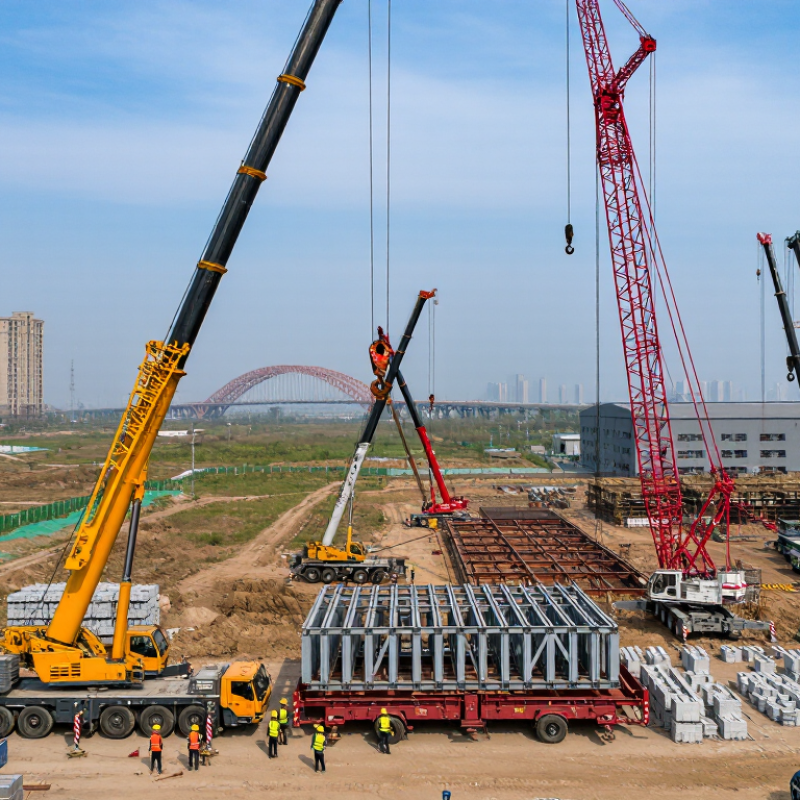
Chinese mobile tower crane suppliers increasingly organize their products by jobsite mobility, lifting height, and assembly method. Common categories include truck-mounted tower cranes, trailer-mounted units, self-erecting cranes, and compact telescopic models. Truck-mounted machines suit urban projects where roads and foundations are already prepared. Self-erecting units reduce setup time on housing sites, while telescopic models offer tighter access between existing buildings.
According to Mordor Intelligence’s mobile crane market outlook, the sector is expected to grow at roughly 4% annually during the second half of this decade. That growth supports demand for compact equipment, lower transport costs, and faster installation.
Chinese suppliers commonly provide hydraulic systems, tower sections, luffing or horizontal jibs, remote controls, and spare-part packages. Product categories can overlap. This makes technical comparison necessary.
For global buyers, supplier evaluation should include load charts, wind limits, axle weights, electrical standards, and documented factory testing. A 2024 report from Research and Markets identifies infrastructure investment and urban construction as major mobile crane demand drivers. However, catalogue capacity is not working capacity. A crane rated for eight tonnes may lift far less at maximum radius. Buyers should request real operating data, inspection records, and operator manuals in the destination language. In practice, delivery drawings are sometimes incomplete. That weakness deserves attention. Tank design, outrigger placement, and local service response can decide whether a seemingly economical crane performs reliably.
How Global Buyers Can Evaluate Suppliers and Certifications
China Top Mobile Tower Crane Suppliers for Global Buyers
How Global Buyers Can Evaluate Suppliers and Certifications
Evaluating a mobile tower crane supplier requires more than comparing prices. Ask for the exact factory address, production scope, and recent project references. A capable supplier should explain chassis capacity, maximum load, working radius, wind limits, and transport dimensions clearly. Request drawings and technical data before discussing final payment. Clear answers often reveal real engineering experience.
Check whether the supplier holds ISO 9001 for quality management and relevant safety certifications for your target market. CE documentation may apply in many European projects, but it should match the exact crane model. Do not accept a generic certificate. Verify certificate numbers with the issuing body when possible. Independent inspection should cover welds, hydraulic systems, electrical controls, load testing, and emergency functions. Factory audits can also reveal calibration records and worker training.
Ask for a complete manual in your working language. It should include installation steps, inspection intervals, spare-part codes, and operating limits. Discuss training, remote support, warranty response, and parts availability before ordering. A supplier may promise fast service, yet the contract should define response times. I have seen buyers focus heavily on certification and overlook after-sales capacity. That is a costly gap. Certification matters, but daily maintenance determines whether a crane remains dependable. Some documents may appear perfect while practical records remain incomplete. Evaluate both.
Ordering, Shipping, Installation, and After-Sales Support
For global buyers, a mobile tower crane order starts with site facts, not a brochure. Confirm lifting capacity, maximum radius, transport dimensions, power supply, wind limits, and local certification needs. A clear purchase file should include drawings, serialised parts lists, packing photos, inspection records, and Incoterms. The World Bank’s 2023 Logistics Performance Index evaluates customs, infrastructure, tracking, and timeliness. These indicators explain why a low factory price can still create costly delays. Request a staged production schedule, with one approval gate before dispatch.
Shipping plans need more than a freight quote. Suppliers should calculate container loading, corrosion protection, port handling, inland delivery, and insurance responsibilities. Mark every bundle with its crane section, weight, lifting points, and installation sequence. At the site, technicians should check ground bearing capacity, anchoring, electrical connections, and exclusion zones. ISO 12480-1 offers recognized safe-use guidance for cranes. The International Labour Organization estimated 2.93 million work-related deaths globally in 2023, making disciplined installation essential. Small errors matter.
After-sales support should be measurable. Require a response-time agreement, remote troubleshooting, spare-parts availability, digital manuals, and operator training. A useful handover includes inspection records, load-test documentation, maintenance intervals, and emergency contact details. In practice, one overlooked connector or missing bolt can stop a project. We have sometimes underestimated local weather and access conditions. That needs honest review. Plans are imperfect. A supplier’s reliability appears in how quickly it corrects those gaps.
China Mobile Tower Crane Supply Process: Typical Planning Time
The chart shows commonly used planning ranges for international mobile tower crane procurement. Actual timing depends on crane configuration, production capacity, destination port, customs clearance, site readiness, and the selected delivery terms. Ocean transit figures represent typical port-to-port planning ranges rather than company-specific performance.