How to Choose the Best Crane Rentals for Your Project?

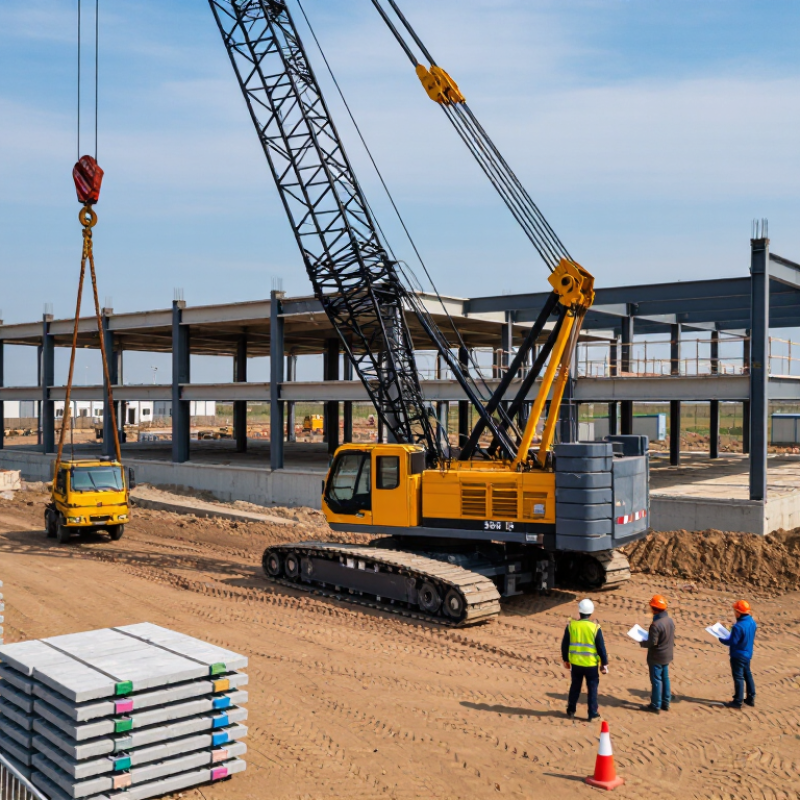
Choosing the right crane rentals can determine whether your project runs smoothly or faces costly delays. The decision involves more than comparing hourly rates. It requires careful attention to load weight, lifting height, ground conditions, access routes, and the project schedule. A crawler crane may suit soft or uneven terrain, while a mobile crane can offer faster setup across changing work areas. Small details matter. A narrow entrance can eliminate an otherwise suitable machine.

Mike Parnell, a respected crane safety consultant and president of Industrial Training International, has said, “Every lift is a new lift.” That principle deserves serious attention. Even familiar construction sites can create unfamiliar risks when weather, soil, wind, or surrounding structures change. Reliable crane rentals should include current inspection records, qualified operators, clear maintenance history, and practical support from the rental provider. Ask direct questions. Vague answers are warning signs.

Experience also means admitting that the first equipment choice may be wrong. A crane that appears powerful enough might lack the required reach or stability. A cheaper rental may demand extra transport, setup, or rigging costs. These overlooked expenses can quietly reshape the budget. The best decision combines engineering judgment, verified site information, and honest communication with the rental company. Before signing an agreement, confirm capacity charts, mobilization requirements, insurance responsibilities, and emergency procedures. Safe planning is not paperwork alone. It is the foundation beneath every successful lift.

How to Choose the Best Crane Rentals for Your Project?

Define Your Project’s Crane Requirements

How to Choose the Best Crane Rentals for Your Project?

Define Your Project’s Crane Requirements

Choosing a crane starts with accurate project information, not a quick capacity estimate. Record the heaviest load, lifting height, working radius, and placement point. Include the load’s shape and attachment method. A long steel beam may catch wind differently than a compact concrete panel.

Measure twice. Then verify.

Review the manufacturer’s load chart with a qualified lifting professional. Capacity changes with boom length, radius, counterweights, and ground conditions. The crane must also handle the lifting accessories, not only the main load. Add realistic margins for movement, wind, and minor measurement errors. Overconfidence here can create dangerous decisions.

Site conditions often determine the rental choice. Check entrance widths, overhead cables, underground utilities, slopes, and available setup space. Soft soil may require mats or engineered ground support. A mobile crane can save time, but its travel path must support the machine’s weight. Indoor work may require low-clearance equipment and careful ventilation planning. Ask about operator qualifications, inspection records, setup supervision, and weather limits.

One project team I reviewed underestimated the tail swing area. The lift looked simple on paper, yet nearby structures restricted movement. The plan needed revision. That mistake was avoidable. Share drawings, delivery schedules, and site photographs with the rental provider. Confirm required permits and local safety controls before reserving equipment. A short site assessment can reveal problems that spreadsheets miss.

How to Choose the Best Crane Rentals for Your Project?

Define the required lifting capacity first. The chart shows representative upper planning capacities for common crane categories; actual capacity depends on load weight, lift radius, boom length, ground conditions, and the manufacturer’s load chart.

Use these figures for early planning only. Confirm the required crane with a qualified lift planner and the project-specific load chart before rental.

Compare Crane Types, Capacities, and Operating Conditions

How to Choose the Best Crane Rentals for Your Project?

Compare Crane Types, Capacities, and Operating Conditions

Choosing the right crane starts with the worksite, not the advertised lifting capacity. A mobile crane suits changing locations and short-term lifts. A tower crane works better for tall structures and repeated vertical movements. Rough-terrain cranes handle uneven ground, but they still need stable setup areas. On active sites, I have found that access problems often delay work more than crane availability.

Check the load chart carefully. Maximum capacity usually applies only at a short working radius. A 10-ton load may become unsafe when lifted far from the crane’s center. Include the load’s weight, lifting accessories, height, radius, and landing position. Ground bearing capacity also matters, especially after rain. Wind, overhead obstructions, narrow entrances, and nearby traffic can change the safest choice. A qualified lift planner should verify these conditions before rental. My earlier planning mistake was focusing on capacity alone. That assumption was too simple.

Tips: Measure the access route before booking. Confirm setup space, outrigger clearance, and ground conditions. Ask for inspection records and the current load chart. Share accurate load dimensions with the rental coordinator. If conditions change, pause the lift and reassess. Small details matter.

Evaluate Rental Companies, Equipment Quality, and Availability

Choosing a crane rental starts with the supplier, not the hourly rate. The American Rental Association’s 2024 forecast estimated U.S. equipment rental revenue at $78.7 billion. That scale creates options, but also inconsistent service quality. Ask for inspection records, operator qualifications, maintenance history, and written load-chart confirmation. A credible rental company should answer without hesitation.

Equipment quality is visible in small details. Check hydraulic lines for abrasion, hooks for distortion, tires for uneven wear, and controls for delayed response. OSHA’s crane standard requires documented inspections and corrective action for unsafe conditions. The 2024 IPAF Global Safety Report recorded 118 fatalities across 100 powered-access incidents in 2023. Cranes differ from access platforms, but the lesson remains relevant: inspection discipline matters. Request recent service dates, not vague assurances.

Availability needs more than a calendar slot. Confirm the exact crane model, boom configuration, counterweight package, delivery window, and replacement plan. A suitable machine should arrive before ground crews and rigging teams stand idle. Discuss wind limits, ground pressure, permits, and emergency support before signing. I have seen “available” equipment become unavailable after transport delays. That is an uncomfortable warning. Build a backup option into the schedule, even when the first quote looks perfect. A cheaper rental can become expensive through waiting time, unsuitable capacity, or missing accessories.

Review Pricing, Contracts, Insurance, and Safety Standards

How to Choose the Best Crane Rentals for Your Project?

Choosing a crane rental requires more than comparing the lowest hourly rate. Ask for a written quote covering delivery, setup, fuel, operators, dismantling, and standby time. Compare total project costs, not just the advertised rate. Some suppliers charge extra when the crane waits for site access or weather clearance. Confirm payment dates, cancellation terms, overtime rates, and responsibility for damaged equipment. Price alone can mislead.

Contracts deserve careful attention. Confirm the crane’s lifting capacity, working radius, ground requirements, and planned operating hours. Weather delays should have clear procedures and fair cost limits. Insurance documents must show current coverage for equipment damage, public liability, and workplace incidents. Request proof of regular inspections, maintenance records, operator qualifications, and compliance with recognized safety standards. Field experience shows that vague paperwork creates expensive confusion. Small omissions matter.

Tips: Ask for a site assessment before signing. Provide accurate load weights and dimensions. Check overhead obstructions, underground services, access roads, and ground stability. Require a written lift plan for complex operations. Verify that the operator and supervisor understand the communication signals. Keep emergency contacts visible onsite. If a quote seems unusually cheap, question what it excludes. A second review may feel slow, but it can expose risks before equipment arrives.

How to Choose the Best Crane Rentals for Your Project? — Review Pricing, Contracts, Insurance, and Safety Standards

The figures below are indicative U.S. market planning ranges in USD for ordinary commercial work. Actual rates depend on location, duration, configuration, transport, operator requirements, ground conditions, lifting plan, and project risk. Obtain a written quotation and site-specific confirmation before budgeting or contracting.

Category Evaluation Dimension Typical Data or Benchmark What to Check Before Signing Practical Selection Note
Equipment Carry-deck or compact mobile crane Typical rated capacity: approximately 2–15 U.S. tons.
Indicative rental planning range: $500–$1,500 per day, usually excluding delivery, fuel, operator, and overtime.
Confirm rated capacity at the required radius, indoor height restrictions, turning clearance, floor loading, and whether a certified operator is included. Suitable for plant maintenance, indoor work, short lifts, and restricted-access areas.
Equipment Rough-terrain mobile crane Typical rated capacity: approximately 25–100 U.S. tons.
Indicative rental planning range: $2,000–$5,500 per day, before mobilization and project-specific extras.
Review the load chart for the exact boom length, radius, outrigger position, counterweight, and terrain conditions. A practical choice for uneven outdoor sites where maneuverability is more important than highway travel.
Equipment All-terrain mobile crane Typical rated capacity: approximately 40–300 U.S. tons.
Indicative rental planning range: $3,000–$12,000 per day, with larger units costing substantially more.
Check road permits, transport configuration, counterweight requirements, setup footprint, ground-bearing capacity, and power-line clearances. Effective for projects requiring both road mobility and high-capacity lifting on prepared sites.
Equipment Crawler crane Typical rated capacity: approximately 50–600 U.S. tons or more.
Rental is commonly quoted by project, week, or month; total cost can include extensive assembly, transport, and dismantling.
Confirm transport routes, assembly area, ground improvement, crane mats, tail-swing limits, erection crew, and minimum rental period. Best for heavy lifts, long-duration work, and sites requiring stable operation without frequent relocation.
Equipment Truck-mounted crane Typical rated capacity: approximately 8–80 U.S. tons.
Indicative rental planning range: $1,200–$4,500 per day, depending on capacity and operator arrangements.
Check highway access, setup time, outrigger spread, loading-zone restrictions, and whether travel time is billable. Useful when the crane must travel between several nearby work locations.
Pricing Rental term and rate structure Daily rates are usually the highest unit cost. Weekly and monthly arrangements generally reduce the effective daily rate, often by about 10%–30%, subject to availability and utilization. Identify minimum billing hours, weekly or monthly minimums, weekend rules, renewal rates, cancellation fees, and standby charges. Compare the complete project cost rather than only the advertised daily rate.
Pricing Operator and labor charges Operator cost may be included in a bare-rental package or billed separately. Overtime, travel time, riggers, signal persons, and additional crew are commonly separate line items. Confirm operator qualifications, regular working hours, overtime multiplier, meal or travel allowances, and responsibility for rigging personnel. A lower equipment rate may not be less expensive after labor and overtime are added.
Pricing Mobilization, demobilization, and transport Transport may include permits, escort vehicles, loading, unloading, assembly, counterweight delivery, and crane mats. These costs can represent a significant portion of a short-term rental. Request separate line items for delivery, return transport, permits, escorts, assembly, dismantling, and site waiting time. Obtain a site-access review before accepting a fixed mobilization price.
Contract Scope of equipment and accessories The contract should specify crane model class, rated capacity, boom or jib configuration, counterweights, lifting accessories, mats, fuel, and included personnel. Match the written scope to the approved lift plan and verify that all required accessories are included and inspected. A capacity rating alone does not prove that the crane can complete the planned lift.
Contract Site conditions and downtime Contracts commonly address weather delays, unsuitable ground, power outages, access restrictions, mechanical breakdowns, and owner-caused delays. Define who pays for standby, weather delays, repairs, replacement equipment, site shutdowns, and delays caused by missing permits. Clear downtime language prevents unexpected charges when the crane cannot safely operate.
Contract Inspection, maintenance, and breakdown response The rental provider should supply current inspection records, maintenance status, load charts, manuals, and documented repair procedures. Establish response times, replacement-equipment obligations, inspection responsibility, and whether rental fees stop during equipment-caused downtime. Ask for records before delivery, not only after a problem occurs.
Insurance Commercial general liability Project requirements commonly request at least $1 million per occurrence and $2 million aggregate, although limits vary by contract and risk profile. Review the certificate of insurance, additional-insured wording, primary and non-contributory wording, waiver of subrogation, and policy dates. Use the project contract and risk assessment to set limits rather than relying on a generic minimum.
Insurance Equipment and physical damage coverage Coverage may be provided through an equipment policy, inland marine policy, or rental-company damage waiver. Deductibles and exclusions differ substantially. Determine who covers theft, collision, overturn, boom damage, weather events, rigging damage, and loss of use. Confirm whether the renter is liable for the full replacement value or only the policy deductible.
Insurance Workers’ compensation and employer’s liability Coverage should comply with the applicable jurisdiction and cover the provider’s operators and employees. Employer’s liability limits are often contract-specific. Request valid certificates and confirm that subcontractors and temporary labor are properly covered. Do not assume that the equipment rental agreement covers injuries to the customer’s employees.
Safety Regulatory compliance For U.S. construction work, mobile-crane operations commonly reference OSHA 29 CFR 1926 Subpart CC, applicable OSHA general requirements, and relevant consensus standards such as ASME B30.5. Confirm the responsible person for compliance, required inspections, operator qualification, signal-person qualification, and record retention. Local, state, federal, and site-owner requirements may impose stricter rules.
Safety Lift plan and load calculation The plan should identify load weight, dimensions, center of gravity, pick points, radius, boom length, configuration, travel path, landing area, and communication method. Require a written lift plan for complex or critical lifts and verify the load weight from reliable documentation. Include rigging weight and below-the-hook devices in the total suspended load.
Safety Ground conditions and outrigger support The supporting surface must withstand the imposed loads from tires, tracks, outriggers, mats, and cribbing. Soil strength and underground utilities may require engineering review. Check soil reports, underground voids, trenches, vaults, drainage, slopes, outrigger reactions, and mat dimensions. Level ground alone does not demonstrate adequate bearing capacity.
Safety Power lines and exclusion zones Maintain the applicable minimum approach distance from energized power lines and establish a controlled swing, travel, and landing zone. Survey overhead and underground hazards, identify a qualified signal person, and use a documented clearance-control method. De-energization or relocation should be considered where safe clearance cannot be maintained.
Safety Operator and signal-person qualifications Operators should meet the qualification or certification requirements applicable to the crane type and jurisdiction. Signal persons should be trained and qualified for assigned signals. Review credentials, experience with the specific crane class, site orientation, language needs, and documented communication procedures. Experience with a similar capacity does not automatically qualify an operator for every crane configuration.
Safety Pre-use and periodic inspections Inspections should cover controls, brakes, hooks, wire rope, sheaves, outriggers, tires or tracks, safety devices, hydraulic systems, and structural components. Obtain the latest inspection records and define who performs daily, monthly, annual, and post-event inspections. Stop work and investigate after overloads, shock loading, contact, severe weather, or suspected structural damage.
Decision Total-cost comparison Compare rental, operator, rigging, transport, permits, fuel, mats, setup, standby, overtime, insurance, taxes, and expected downtime. Request an itemized quote with assumptions, exclusions, validity period, escalation terms, and payment schedule. Select the crane with the lowest safe total project cost, not necessarily the lowest base rate.

Planning references: U.S. occupational safety requirements for cranes and derricks in construction, applicable local lifting regulations, equipment manufacturer load charts, and recognized crane inspection and operation standards. Always confirm the current requirements for the project location.

Confirm Site Logistics, Delivery Plans, and Operator Support

Choosing a crane rental starts with the site, not the advertised lifting capacity. Measure gate widths, overhead cables, ground bearing strength, and nearby traffic routes. A 100-ton crane still fails if delivery access is too narrow. OSHA estimates about 82 crane-related deaths occur annually in the United States, making site control essential. The figure appears in OSHA’s crane safety guidance.

Confirm the delivery sequence in writing. Request arrival times, assembly space, transport permits, escort needs, and weather alternatives. Ask whether the rental company will inspect ground conditions before mobilization. ARA’s 2024 Equipment Rental Industry Forecast placed U.S. rental revenue above 59 billion dollars. That scale reflects strong demand, but it does not guarantee careful planning. I would not accept “the truck driver will manage it” as a logistics plan.

Operator support deserves equal scrutiny. Verify the operator’s documented qualifications, recent equipment experience, and familiarity with the lift plan. Confirm who supplies the signal person, lift director, riggers, and backup operator. Schedule a pre-lift meeting beside the crane, not through hurried phone calls. Shortcuts happen. They should be challenged. Ask how the team records wind readings, maintenance checks, near misses, and stop-work decisions. A cheaper rental can become expensive after one missed delivery window or an unsupported lift.