How to Choose the Right Mobile Tower Crane for Your Construction Project
Choosing the right mobile tower crane for your construction project is a pivotal decision that can significantly impact efficiency, safety, and overall project success. As construction projects become increasingly complex, the demand for versatile and powerful equipment rises, making the mobile tower crane an invaluable asset on any job site. Unlike traditional cranes, mobile tower cranes offer enhanced maneuverability and can easily be relocated as project requirements evolve, allowing for greater flexibility in construction planning.
Before making a decision, it’s essential to assess several factors including the crane’s lifting capacity, height reach, and operational environment. Each project has unique demands, whether it’s a high-rise building construction or a bridge expansion, and understanding these needs is critical in selecting the most suitable mobile tower crane. Additionally, evaluating the ground conditions and space constraints of the job site can help ensure that the mobile tower crane chosen is not only effective but also safe and compliant with regulations.
Ultimately, selecting the right mobile tower crane involves a careful analysis of your project's specific requirements, as well as an understanding of the capabilities that different cranes offer. This introduction into the selection process sets the stage for more detailed considerations, ensuring that your construction project is equipped with the appropriate tools to achieve optimal results.
Understanding Different Types of Mobile Tower Cranes and Their Applications
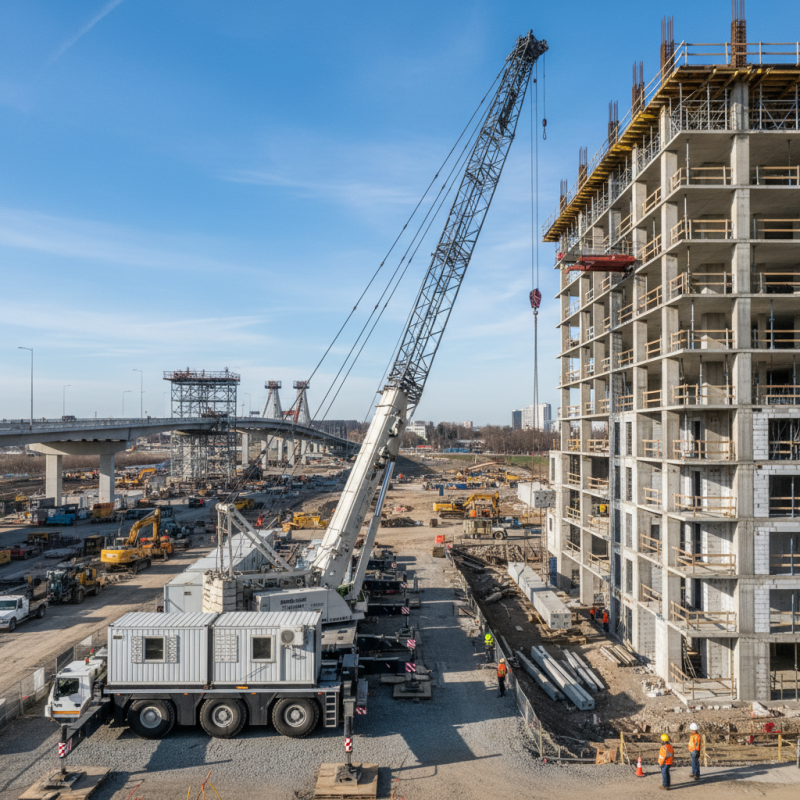
When selecting the right mobile tower crane for your construction project, it is essential to understand the various types available and their specific applications. Mobile tower cranes are versatile lifting machines that combine the advantages of both tower cranes and mobile cranes. They are typically mounted on a wheeled chassis, allowing for easy relocation and setup at different job sites. Their compact design and ability to move on-site make them ideal for urban environments where space is limited.
There are primarily two types of mobile tower cranes: articulated and telescopic. Articulated cranes feature a bending arm structure, which allows for enhanced reach and maneuverability around obstacles, making them suitable for complex construction layouts. On the other hand, telescopic cranes extend horizontally and vertically, providing greater lifting height and capacity for larger materials, which is beneficial for high-rise construction or infrastructure projects. Understanding the distinctions between these types will enable project managers to select the most suitable crane based on their specific lifting needs, constraints of the site, and the nature of the materials being handled.
Key Factors to Consider When Selecting a Mobile Tower Crane for Projects
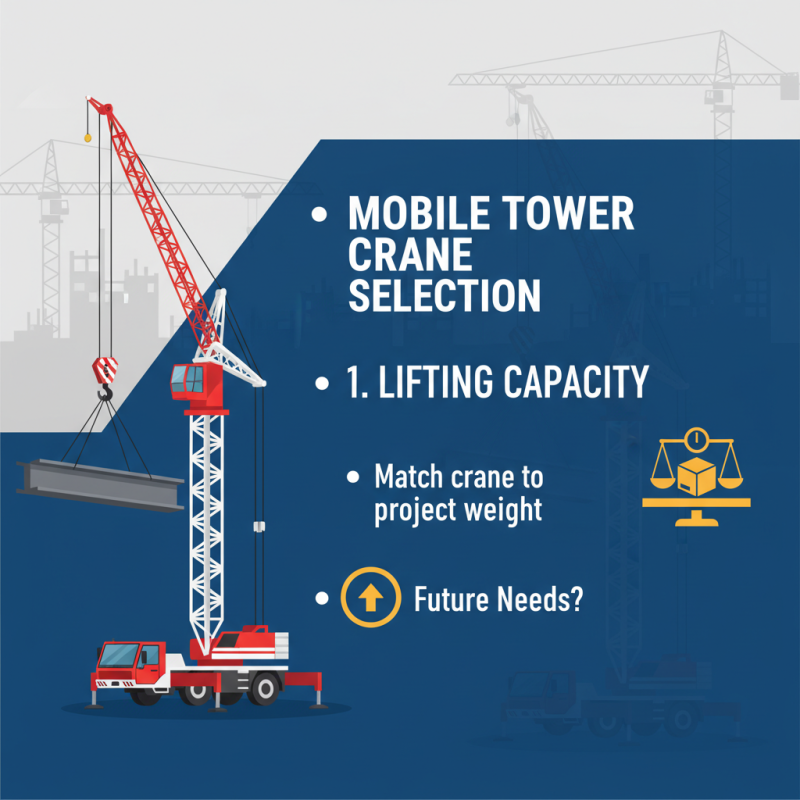
When selecting a mobile tower crane for your construction project, several key factors must be taken into account to ensure optimal performance and safety. First, consider the lifting capacity required for your specific project. This includes evaluating the weight of the materials and equipment that will be lifted, as well as any potential future needs as the project progresses. A crane with an insufficient lifting capacity can lead to delays and safety hazards, so it is essential to match the crane's capabilities with the project requirements.
Next, assess the operational height and reach of the crane. The height at which materials need to be lifted, along with the radius of the crane's reach, will significantly impact its effectiveness on site. Make sure to evaluate the architecture of the surrounding area, including any nearby buildings or structures, which may limit the crane's operation. Additionally, consider the terrain and ground conditions where the crane will be positioned. A stable and even foundation is critical for safe operation, and if the project site has uneven ground, you may need a crane that can adapt to those conditions through leveling capabilities or additional stabilizing equipment.
Lastly, ease of mobility and setup should also be factored into your decision. Select a mobile tower crane that can be easily transported to and from your project site and set up efficiently to minimize downtime. The time it takes to erect and dismantle the crane can significantly affect the project timeline, so opting for a model that excels in rapid setup without sacrificing safety is crucial. By carefully considering these factors, you can ensure that the chosen mobile tower crane will contribute favorable outcomes for your construction project.
Evaluating Load Capacity Requirements for Your Specific Construction Needs
When selecting a mobile tower crane for a construction project, one of the most critical factors to consider is the load capacity requirements specific to your operations. The load capacity refers to the maximum weight that a crane can safely lift and move, which varies significantly based on the crane model and configuration. It's essential to assess the heaviest materials and equipment that will be used on-site, as well as any potential future needs, to ensure that the selected crane can handle these loads without compromising safety or efficiency.
Additionally, understanding the different types of loads—static, dynamic, and shock loads—can help in making an informed decision. Static loads represent the weight that will be lifted without movement, while dynamic loads account for shifting weights during operations. Shock loads occur due to sudden movements or impacts, which can place extra stress on the crane and its components. By conducting a thorough evaluation of these load factors, project managers can choose a mobile tower crane that not only meets current requirements but also provides flexibility for varying construction demands, ultimately enhancing productivity and safety on site.
Assessing Mobility and Setup Time for Efficient Crane Operations
When selecting a mobile tower crane for a construction project, assessing mobility and setup time is crucial for ensuring efficient crane operations. According to a recent report by the International Tower Crane Safety and Operations Association, mobility is a key factor that impacts the overall productivity of a construction site. Cranes that can quickly relocate and adapt to various site conditions can significantly reduce downtime. For instance, cranes with a shorter wheelbase are often easier to maneuver in confined spaces, allowing for rapid positioning without the need for extensive site modifications.
Setup time is another critical consideration, as it directly influences the project's timeline and labor productivity. Data from the Construction Industry Institute suggest that delays in crane setup can lead to up to 30% of overall project delays. Therefore, selecting a mobile tower crane that can be assembled quickly and efficiently should be a priority. Features such as pre-assembled components and self-erecting capabilities can streamline the setup process, ultimately saving both time and costs. By prioritizing cranes that excel in these areas, project managers can enhance operational efficiency and adhere to tight schedules, ensuring the successful delivery of construction projects.
Cost Analysis: Budgeting for Mobile Tower Crane Rentals vs. Purchases
When embarking on a construction project, understanding the financial implications of mobile tower crane options is crucial. A detailed cost analysis reveals that renting a mobile tower crane can be substantially more flexible for short-term projects. According to a report by the American Rental Association, the average rental rate for a mobile tower crane can range from $1,600 to $3,200 per week, depending on the crane's capabilities and rental period. This option alleviates the burden of ownership costs, including maintenance, insurance, and storage, which can amount to 30-40% of the total purchase price over time.
Conversely, purchasing a mobile tower crane can be justified for long-term projects or frequent use. The upfront cost for a new crane can range from $100,000 to $500,000 or more. A 2022 report by Statista indicates that construction companies are increasingly seeing the value in owning equipment, with 65% favoring purchase for projects expected to last over a year. However, it’s imperative to weigh the maintenance costs, which can average around 15% of the initial cost annually, against potential rental flexibility. Ultimately, choosing between renting and purchasing hinges on project duration, financial viability, and operational needs.