How to Choose the Best Boom Truck Crane Rental for Your Project?
Choosing the best boom truck crane rental can be challenging. As John Smith, a crane rental expert, once said, "Understanding your project needs is key to selecting the right equipment." The right boom truck can enhance efficiency and ensure safety. However, mistakes in this process can lead to project delays and increased costs.
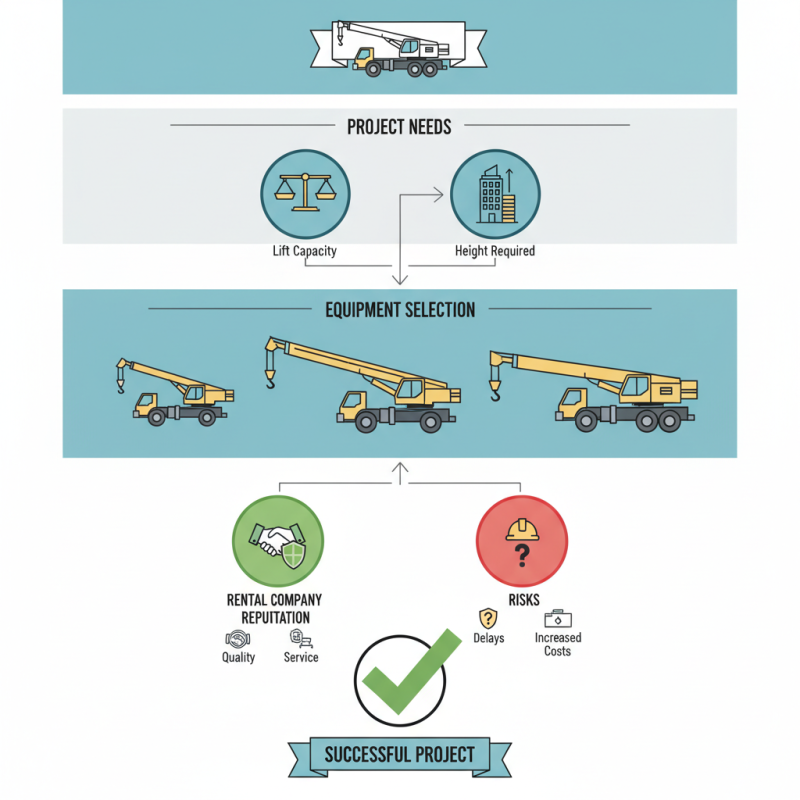
Consider the specific requirements of your project. Will you need a crane with a certain lift capacity? What is the height required for the job? Each project is unique, and so are the specifications for boom truck crane rentals. There’s a lot to think about, and overlooking details can be costly.
Inspect the rental company's reputation. Are they known for quality equipment and great service? Don't hesitate to ask questions. Sometimes, it's hard to know what you really need. This can lead to confusion and errors in judgment. Remember, the right boom truck crane rental can make or break your project. Make informed decisions based on your project needs and available resources.
Factors to Consider When Renting a Boom Truck Crane
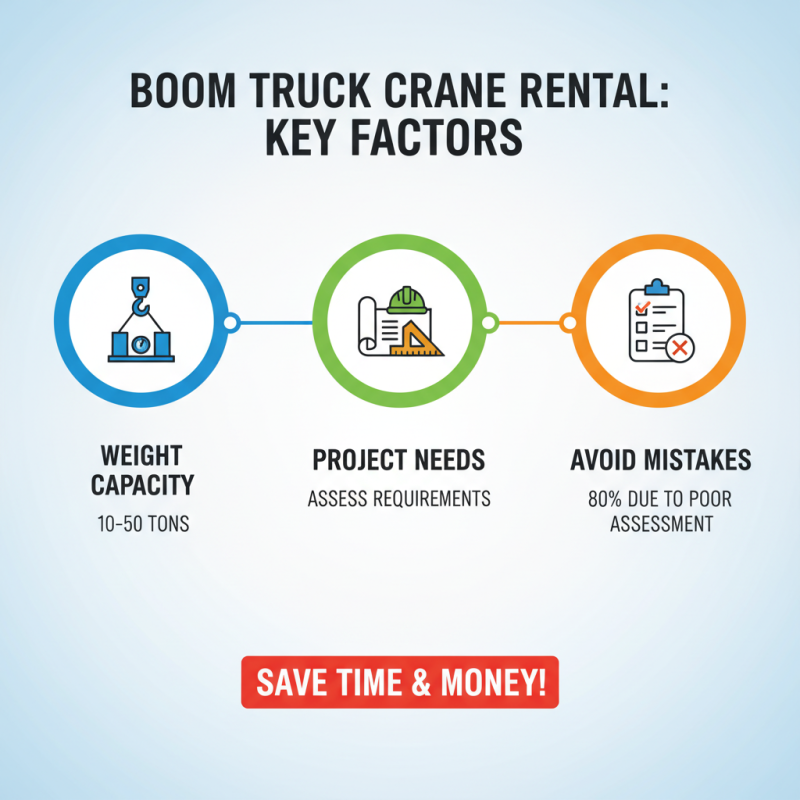
When selecting a boom truck crane rental, several factors must be taken into account. Understanding your project's specific needs is essential. According to industry reports, 80% of rental mistakes come from not assessing project requirements thoroughly. Know the weight capacity you need, which typically ranges from 10 to 50 tons for boom trucks.
Another critical aspect is the crane's reach. Many projects require precise lifting heights. For instance, a standard boom truck can extend from 30 to 60 feet. If your project involves heightened structures, this measure is crucial. Additionally, consider the terrain where the crane will operate. Uneven ground can lead to accidents or equipment failure.
Cost is an unavoidable factor as well. Research shows that rental rates can vary significantly, often between $200 to $600 per day. While lower prices might be tempting, they can indicate hidden issues. Always inspect the equipment. Be wary of trucks that show excessive wear or maintenance concerns. This careful assessment can save money and prevent project delays.
Types of Boom Truck Cranes and Their Applications
When selecting a boom truck crane, it’s essential to understand the different types available. Telescoping boom cranes are versatile and can extend to reach high places. They are great for construction sites where height is crucial. Articulating boom cranes, with their jointed arms, can maneuver around obstacles. This makes them ideal for tight spaces or urban settings.
Knowing the capacity is also important. Each type has weight limits and reach capabilities. For lifting heavy loads, choose a robust model. Some projects may require a crane that can lift 10 tons or more. Additionally, consider whether you need a crane with a basket for personnel. This adds a layer of safety when workers must reach elevated areas.
Think about the rental duration as well. Longer rentals can provide better rates, but short projects may necessitate a simple contract. Without good planning, unnecessary costs can arise. Reflect on the project scale before making a decision on the crane. The wrong choice can lead to delays, so consider all applications carefully.
How to Choose the Best Boom Truck Crane Rental for Your Project? - Types of Boom Truck Cranes and Their Applications
| Type of Boom Truck Crane |
Maximum Load Capacity |
Horizontal Reach |
Common Applications |
| Telescopic Boom Crane |
Up to 60 tons |
Up to 100 ft |
Construction, Heavy Lifting |
| Articulating Boom Crane |
Up to 30 tons |
Up to 80 ft |
Tree Trimming, Electrical Work |
| Lattice Boom Crane |
Up to 250 tons |
Up to 300 ft |
Oil & Gas, Heavy Engineering |
| Rough Terrain Crane |
Up to 50 tons |
Up to 70 ft |
Mining, Outdoor Construction |
| Crawler Crane |
Up to 350 tons |
Varies with configuration |
Infrastructure Projects, Demolition |
Assessing Load Capacity and Technical Specifications
When renting a boom truck crane, assessing load capacity is crucial. Different projects have unique requirements. Determine the maximum weight your project needs to lift. This ensures that the crane you select can handle the load safely.
Consider the boom length and reach. Some tasks require longer booms for effective lift. Measure the area where the crane will operate. This helps in understanding whether the crane can maneuver properly. If your space is limited, shorter booms may be more suitable.
**Tips:** Always double-check the specifications before finalizing a rental. An unsuitable crane can cause delays or accidents. Also, consult with professionals for complex projects. They might offer insights that you haven’t considered yet. Evaluating the crane's stability is also essential, especially in adverse weather conditions. Safety should never be compromised.
Load Capacity of Boom Truck Cranes for Various Projects
Evaluating Rental Costs and Budget Constraints
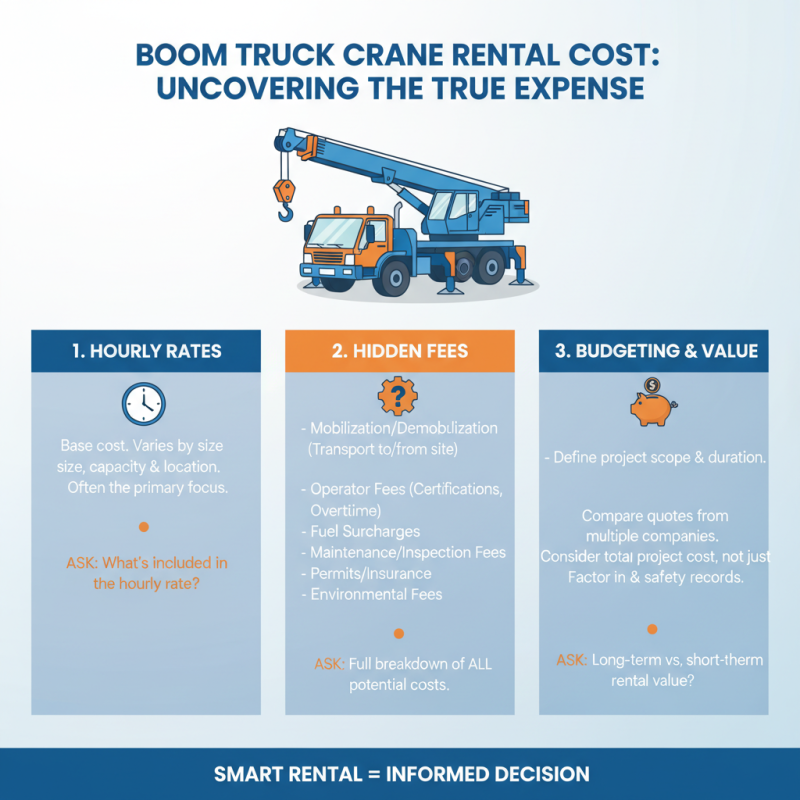
When renting a boom truck crane, it's essential to evaluate the rental costs carefully. Understanding your project's budget constraints can help you make informed decisions. In many cases, companies may focus only on the hourly rate without considering other factors. Hidden fees can quickly add up, so always ask for a full breakdown of costs.
Tips: Compare different rental companies. Not all offer the same pricing structure. Some may include insurance, while others charge separately. Analyze what each rental package includes. It’s easy to overlook these details, but they can have significant financial implications.
Another aspect often neglected is the duration of the rental. Many people assume longer rentals save money. However, daily rates might be more favorable for short-term needs. Keep an eye on the total rental period. Calculate whether penalties exist for early returns or extensions. This negligence can lead to unnecessary expenses.
Remember, a boom truck crane's capabilities also play into costs. Higher capacities may incur more fees. Choose equipment that meets your needs without overpaying for excess capacity. Balancing costs and capabilities is key. Even small adjustments in your selections can lead to significant savings.
Understanding Rental Terms and Conditions for Boom Trucks
When renting a boom truck crane, understanding the rental terms and conditions is crucial. These documents outline responsibilities and expectations for both parties. Read through the fine print carefully. Look for hidden fees, insurance requirements, and maintenance responsibilities. Sometimes, rental companies might charge for fuel or add extra costs for late returns. Knowing these details can help you budget accurately.
Duration of rental is another important factor. Some companies offer daily rates, while others provide weekly or monthly options. Make sure the rental period aligns with your project timeline. Early returns often come with penalties. You need to be cautious here. It can be frustrating if you finish a job early and still pay for unused time. Additionally, don’t overlook the requirements for operator qualifications. Some rentals may require certified operators, which can add to your costs unexpectedly.
In addition, check if the rental includes operator training. This training can help ensure safety and efficiency on the job site. Some contracts may have clauses regarding equipment damage or accidents. Understanding these conditions can prevent future disputes. A careful review can reveal details that may significantly impact your project’s success. Keep an open mind and be ready to clarify anything that seems confusing.