How to Choose the Right Crawler Crane Rental for Your Project?
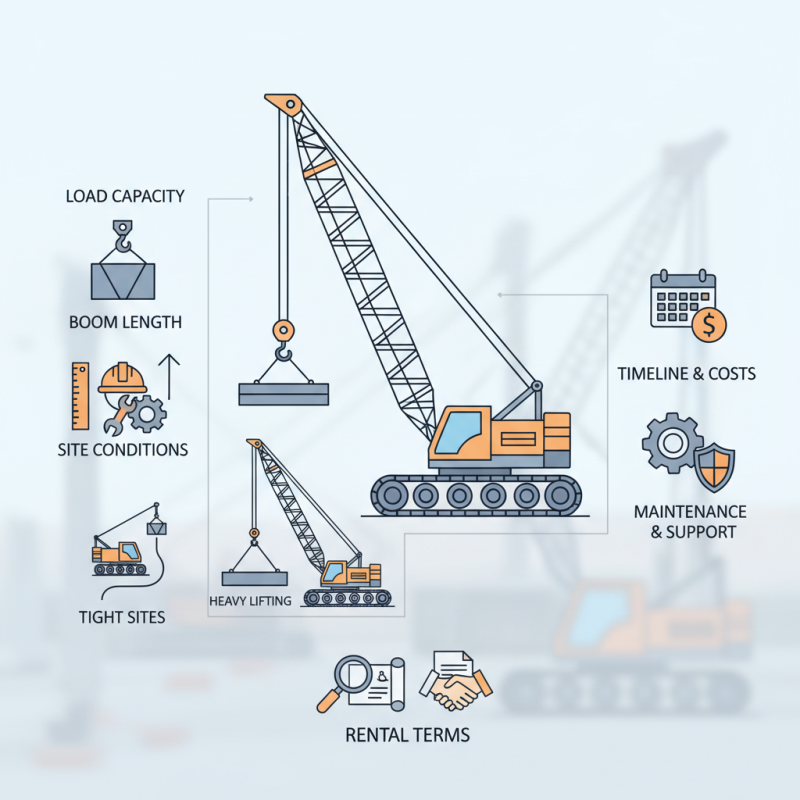
Choosing the right crawler crane rental is crucial for your construction project. This decision can significantly impact efficiency and safety. With various options available, it can be overwhelming. Every project has unique requirements. Consider factors like load capacity, boom length, and site conditions. Each detail matters.
Incorrect choices may lead to delays and added costs. Assessing the terrain and space is essential. A compact crawler may be necessary for tight sites. Conversely, a robust model is ideal for heavy lifting. Take time to evaluate your project's specific needs. Some may rush this process and face consequences later.
Don’t overlook rental terms and equipment support. Some companies provide on-site assistance, which can be beneficial. Review all options carefully. Making an informed decision will ensure the right crawler crane rental for your needs, ultimately supporting project success.
Understanding the Types of Crawler Cranes Available for Rent
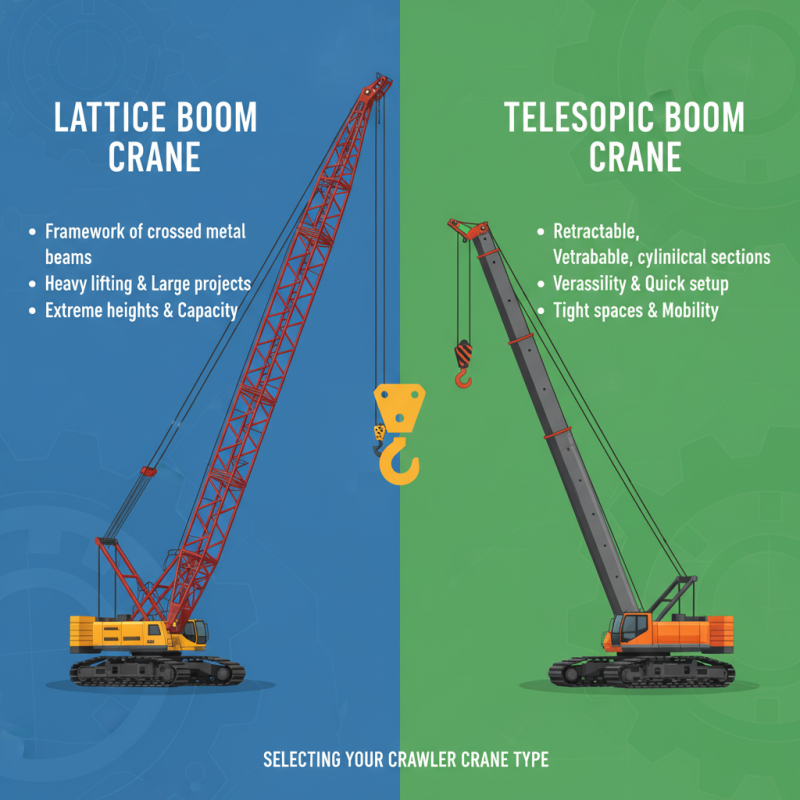
When selecting a crawler crane for your project, recognizing the different types available is essential. Crawler cranes are categorized mainly into two types: lattice boom and telescopic boom cranes. Lattice boom cranes feature a framework of crossed metal beams, providing a sturdy structure. These are ideal for heavy lifting tasks and large construction projects. They can reach great heights and have impressive lifting capacities.
On the other hand, telescopic boom cranes utilize extendable tubes. They are more compact and easier to transport. Ideal for projects with limited space, these cranes can swiftly adapt to various lifting requirements. However, their lifting capacity is generally lower than that of lattice boom cranes, which might impact project efficiency. Understanding the nuances of each type will help avoid mistakes in choosing the right equipment.
Consider your site conditions, the weight of materials, and the height you need to reach. Sometimes, a standard option may not fit all needs. Planning is crucial, yet unforeseen challenges often arise, leading to adjustments in equipment choice. Ensure maintenance records are available to avoid surprises. Selecting the right crawler crane can be a learn-as-you-go experience, and reflection on past projects can guide future decisions.
Evaluating Rental Costs and Budget Considerations
When evaluating crawler crane rental costs, it’s essential to consider several factors. Begin with the project scope. Larger jobs may require more powerful cranes. Ensure you account for peak usage times. Prices can vary significantly based on demand. Additional costs might include transport fees and insurance. These can raise your overall budget quickly.
Budget considerations extend beyond just the rental fee. Think about potential overtime costs if your project runs longer than expected. Maintenance fees can also arise. It’s wise to clarify what is included in the rental agreement. Hidden or extra charges can catch you off guard.
Researching rental options is critical. Gathering quotes from different sources is helpful. However, don’t just settle for the cheapest option. Quality matters, too. Equipment condition can impact your project efficiency. Sometimes, a slightly higher cost for reliable machinery may save you money in the long run.
How to Choose the Right Crawler Crane Rental for Your Project? - Evaluating Rental Costs and Budget Considerations
| Crawler Crane Type |
Weight Capacity (tons) |
Rental Cost per Day ($) |
Minimum Rental Period (Days) |
Transportation Fee ($) |
| Small Crawler Crane |
30 |
1500 |
3 |
300 |
| Medium Crawler Crane |
50 |
2500 |
5 |
500 |
| Large Crawler Crane |
80 |
4000 |
7 |
700 |
| Extra Large Crawler Crane |
120 |
6000 |
10 |
1000 |
Considering Crane Specifications and Performance Features
Choosing the right crawler crane rental begins with understanding its specifications. Assess the maximum load capacity required for your project. Does the crane have enough lifting power? Check the boom length and height. These factors impact how high or far loads can be lifted.
Performance features should not be overlooked. Consider the crane's operation speed and stability. Faster cranes can save time, but may compromise safety. Look into fuel efficiency and emissions. Are they up to standard? A crane that uses less fuel can reduce costs.
Also, think about the ground conditions. Some cranes perform well on soft ground, while others do not. Check the type of tracks. Steel tracks can offer better stability but may not be ideal for all terrains. Reflect on potential issues you might face. Rushing this step can lead to project delays.
Selecting a Reputable Crane Rental Company and Service Support
Choosing a reputable crane rental company is crucial for your project’s success. The right provider ensures safety and efficiency. Start by checking online reviews. Look for feedback about their reliability and service quality. A company with a strong reputation will often have a history of satisfied customers.
Tips: Always ask for references. Speaking directly with previous clients can provide insights that online reviews may miss. Consider companies that have been in business for several years. Experience often translates into better service.
Evaluate the service support offered. Does the company provide training for the equipment? Is technical assistance available if you run into issues? A company that stands behind its equipment is essential for a smooth project.
Tips: Inquire about emergency support. You want to know that help is just a call away. Don't overlook the importance of a clear contract. It should outline all terms of the rental, ensuring transparency.