10 Essential Tips for Operating a Boom Truck Crane Safely and Efficiently?
Operating a boom truck crane requires expertise and attention to safety. According to John Smith, a seasoned crane operator with over 20 years of experience, "Safety is not just a procedure; it's a mindset." This mindset is essential when navigating the complexities of boom truck crane operations. Each lift presents unique challenges that demand careful consideration and planning.
Understanding the equipment, load capacity, and environmental conditions are crucial for success. Operators must be keenly aware of their surroundings. It's not enough to rely on training alone. Regular practice and a commitment to ongoing learning play significant roles. Mistakes can happen, even to the most seasoned operators. Reflecting on those missteps is important for improvement and enhanced safety.
In high-stakes environments, the weight of responsibility is heavy. Effective communication among crew members is essential, as is a thorough pre-operation checklist. Each lift is an opportunity to demonstrate skill and responsibility. Prioritizing safety and efficiency is vital in reducing accidents and ensuring project success. The boom truck crane industry thrives on leaders who share these values.

Understanding Boom Truck Crane Components and Functions
Understanding the components and functions of a boom truck crane is essential for safe operation. A boom truck crane consists of a mounted boom, a hoisting mechanism, and stabilizers. Each part plays a critical role in lifting heavy loads and ensuring stability. Familiarize yourself with each component to operate confidently.
While operating the crane, focus on load assessment. Know the weight limits of your boom truck. Overloading can cause accidents. Always check the load capacity chart before lifting. Monitoring the environment is equally crucial. Consider wind conditions and ground stability. These factors greatly influence safety and efficiency.
Regular inspection of your crane is vital. Look for signs of wear or mechanical issues. A well-maintained crane performs better and reduces risks. Additionally, communicate clearly with your team during operations. Miscommunication can lead to hazards. Always have a plan in place for emergencies. Safety should be your top priority at all times.
Pre-Operational Checks: Inspections and Safety Procedures
Before operating a boom truck crane, pre-operational checks are crucial. Begin with a visual inspection of the entire crane. Look for any signs of damage or wear.
Inspect the boom, tires, and hydraulic lines. Any visible issues should be documented and addressed. This step ensures the equipment is safe to use.
Remember, neglecting this can lead to accidents.
Next, check safety devices. Confirm that the load indicators and emergency shut-off function properly. Test your outriggers to ensure they deploy correctly. Regularly review these procedures with your crew. Everyone should be aware of their roles.
Conducting these checks might seem tedious, but it’s vital for efficiency and safety.
Reflect on past experiences where lack of thorough checks led to issues. Emphasizing these practices can drastically reduce risks on the job site.
Proper Load Management Techniques for Boom Truck Cranes
Effective load management is crucial when operating boom truck cranes. Ensuring safety and efficiency starts with understanding the load capacity. Each boom truck has a specified weight limit. Ignoring this can result in accidents or equipment failure. Assess the weight of the load before lifting. Utilize a scale if necessary. This helps to confirm that your load adheres to the crane's capabilities.
Proper load positioning is also key. Distribute the weight evenly on the boom to maintain balance. An imbalanced load can lead to tipping or instability. Use rigging equipment like slings or chains to secure loads. Inspect these tools regularly for wear and tear. Neglecting rigging safety can lead to catastrophic failures. Remember to keep the load as low to the ground as possible during movement. This reduces the center of gravity and enhances stability.
Consider wind conditions when operating outside. High winds can shift or sway a load, making control difficult. Always communicate with ground personnel using clear signals. Miscommunication can result in dangerous mistakes. Regular training on load management practices can sharpen skills. Evaluate past operations for potential improvements. This reflection shapes better safety practices in the future.
Best Practices for Operating Controls and Maneuvering
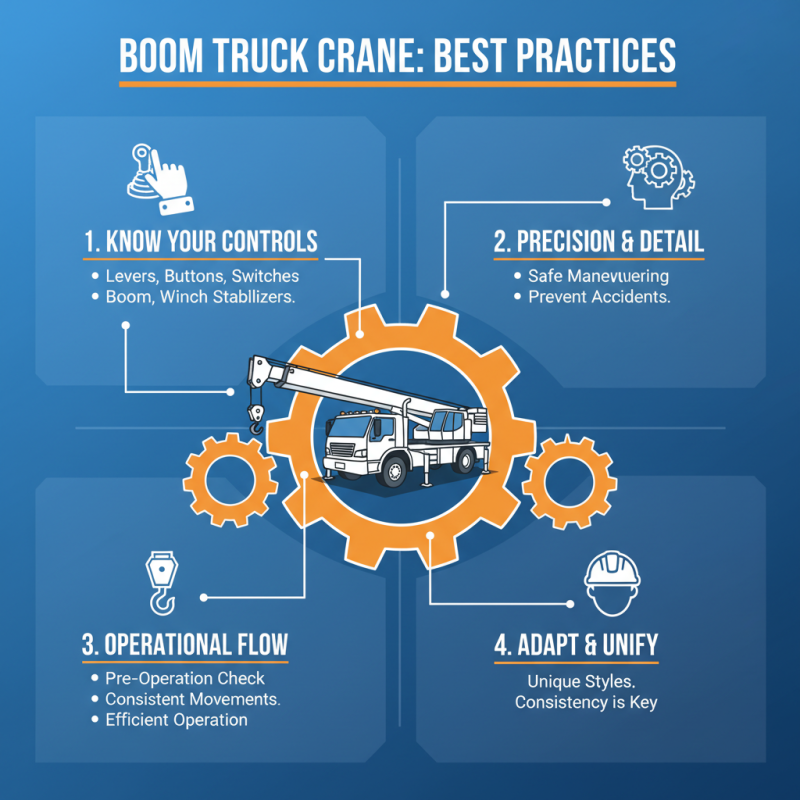
Operating a boom truck crane requires precision and attention to detail. Understanding the controls is crucial for safe maneuvering. Familiarize yourself with all levers, buttons, and switches before starting. Know which control manipulates the boom, winch, and stabilizers. This knowledge helps prevent accidents and improves efficiency. Each operator has their unique style, but consistency is key.
When maneuvering the crane, always maintain awareness of your surroundings. Look out for overhead lines and nearby structures. Use your mirrors and make sure to check blind spots. Smooth movements are essential. Jerky motions can lead to spills or dropped loads. Operators often overestimate their visibility, which can lead to mishaps.
Communicating with ground personnel is vital. Establish clear signals before lifting or moving loads. Miscommunication can cause dangerous situations. Regularly review these signals with your team. Continuous practice and open discussions can reduce the chances of errors. Like any skill, improving crane operation takes time and reflection. Always assess your performance and seek feedback.
Effective Communication and Signaling Between Crew Members
Effective communication and signaling are vital to safely operating a boom truck crane. Every crew member must understand the signals used on site. Clear visibility can prevent accidents. For example, use simple hand signs that everyone recognizes. This minimizes misunderstandings during operations.
Another critical tip involves maintaining a constant line of communication. If a crew member needs help, they should not hesitate to signal for it. It’s not just about speaking but also about observing. A crane operator should watch for any signs of distress or confusion from the crew. This awareness can make a significant difference.
Lastly, establish a code for emergency situations. Crew members should be trained to react quickly and efficiently. Practicing these scenarios can help solidify the signals. Employees should feel empowered to voice concerns. Reflecting on past experiences can improve overall safety. Remember, communication is not just about talking; it's about listening and responding effectively.
10 Essential Tips for Operating a Boom Truck Crane Safely and Efficiently: Effective Communication and Signaling Between Crew Members
| Tip No. |
Tip Description |
Best Practices |
Communication Method |
| 1 |
Pre-Operation Inspection |
Conduct a thorough inspection of the crane before use. |
Radio Check |
| 2 |
Establish Clear Roles |
Define roles and responsibilities for each crew member. |
Hand Signals |
| 3 |
Develop a Signaling System |
Create a systematic approach for hand signals and verbal communication. |
Verbal Commands |
| 4 |
Maintain a Safe Distance |
Ensure crew members are aware of safe distance protocols. |
Hand Signals |
| 5 |
Regular Communication |
Hold regular briefings to discuss operations and safety measures. |
Team Meetings |
| 6 |
Use Spotters |
Assign a spotter to assist with blind spots. |
Verbal & Visual Signals |
| 7 |
Avoid Distractions |
Minimize distractions in the work area. |
Verbal Communication |
| 8 |
Emergency Protocols |
Establish emergency communication and evacuation procedures. |
Emergency Signals |
| 9 |
Post-Operation Review |
Review operations after completion for safety insights. |
Team Discussion |
| 10 |
Continuous Training |
Provide ongoing training for all crew members. |
Workshops & Drills |