10 Essential Tips for Using a Tadano Crane Effectively
Using a Tadano crane effectively can significantly enhance your lifting operations. However, it requires more than just basic knowledge. Understanding the intricacies of this powerful equipment is essential. Many operators overlook key aspects, which can lead to mistakes.
Safety should always be a priority. A Tadano crane, while robust, can pose risks if not handled properly. Operators must be trained and familiar with the specific model they are using. Each crane has unique features and limitations. Regularly reviewing these details can prevent accidents.
Moreover, optimizing the crane's capabilities is crucial. Sometimes, less is more when it comes to load management. Overloading a Tadano crane can lead to failure. Operators should reflect on their practices and look for areas of improvement. Balancing speed with accuracy is also vital for efficient performance.
Understanding the Types of Tadano Cranes and Their Specific Uses
When considering the types of Tadano cranes, it's essential to understand their specific applications. All terrain cranes are versatile and can operate on various terrains. They offer great stability and are ideal for complex job sites. However, moving them can be tricky. Proper assessment of the site is critical to ensure smooth operation.
On the other hand, truck-mounted cranes provide flexibility. They are easy to transport and set up quickly. These cranes are suited for lighter loads, but their lifting capacity is often limited. Users should think carefully about the load weight to avoid mishaps.
Rough terrain cranes, designed for uneven surfaces, can tackle tough outdoor jobs. Yet, operators must navigate carefully to prevent tipping.
Different cranes serve distinct purposes. This complexity requires operators to reflect on their needs and choose wisely. An adequate understanding of each crane type will lead to better decisions. Familiarity with their limitations can enhance safety and performance on site. Ignoring the specific uses of each crane might lead to inefficient work.
Essential Pre-Operational Checks Before Using a Tadano Crane
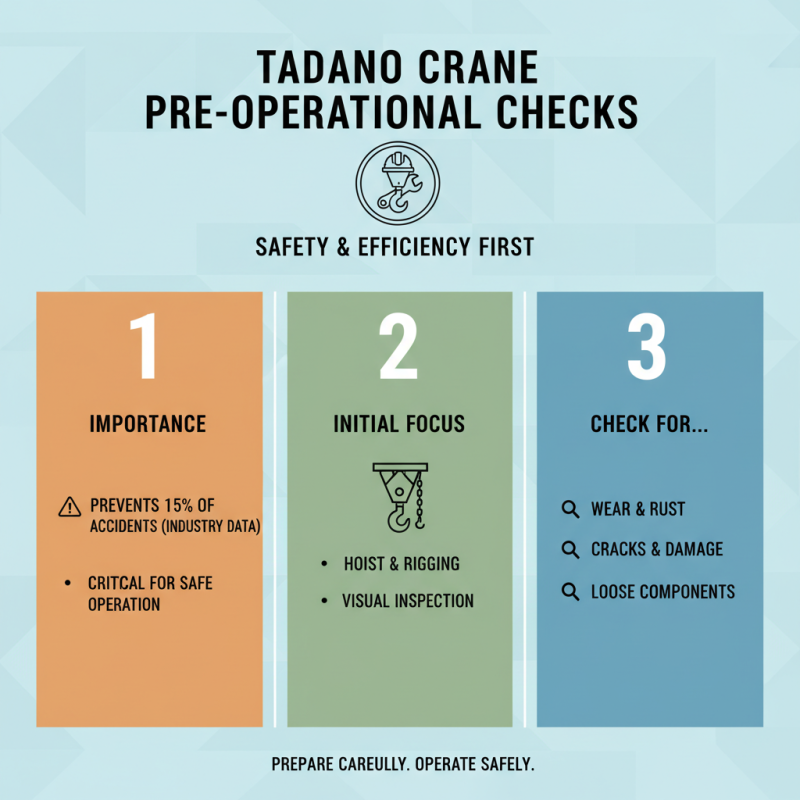
Before operating a Tadano crane, thorough pre-operational checks are essential. These checks ensure safety and efficiency. According to industry data, improper crane setup accounts for approximately 15% of accidents. This statistic emphasizes the need for careful preparation. Inspect the crane's hoist and rigging components first. Look for signs of wear, rust, or any visible damage. A small crack can lead to significant failures.
Next, ensure that all controls function properly. Test the crane's winches, brakes, and safety devices. Malfunctioning equipment can create hazardous situations. According to a report by the Occupational Safety and Health Administration, effective pre-operational checks can reduce the risk of accidents by up to 25%. It’s crucial to review the load chart. Ensure the crane can handle the intended load. Overloading is a frequent issue that leads to overturning. Many operators underestimate weight, which can be dangerous.
Maintain clear communication with the crew. Designate signals and lines of sight for operations. Miscommunication has led to many preventable accidents. Reports show that nearly 40% of crane incidents involve miscommunication. Encourage team members to speak up if they notice something amiss. This collaborative approach fosters safety awareness and reduces risks. Ignoring pre-operational checks isn't just careless; it jeopardizes lives and investments. Each step matters.
Best Practices for Safe and Efficient Crane Setup
Setting up a crane safely is crucial for any construction site. Effective crane setup begins with a proper site assessment. Always inspect the ground conditions.
Soft or uneven terrain can lead to instability. Reports indicate that about 50% of crane accidents are due to poor setup practices. It's vital to identify overhead obstructions and check power lines, as they pose significant risks.
Before starting, ensure all team members understand their roles. Communication is key. Studies show that clear communication reduces accidents by 70%. Work with hand signals or radios, especially in noisy environments. This can minimize misunderstandings about load movements.
Preparing the crane itself is equally important. Check all indicators and limits before operating. A common mistake is skipping routine inspections, which can lead to mechanical failures. Establish a routine that includes checking safety devices and backup systems. In the end, every detail matters. Small oversights can lead to large hazards. Reflecting on setup procedures and learning from past incidents can foster a culture of safety on-site.
Key Techniques for Operating a Tadano Crane Smoothly
Operating a Tadano crane smoothly requires attention to detail and effective techniques. Proper load management is crucial. According to industry studies, overloading a crane can lead to accidents. Ensuring that the load is within specified limits enhances safety. Familiarize yourself with the load charts. These charts provide detailed insights into lifting capabilities at different boom angles.
Communication among crew members is vital. A clear plan helps in executing complex lifts. Data indicates that poor communication contributes to nearly 30% of crane-related incidents. Assign specific roles within your team. This ensures that everyone knows their responsibilities, reducing confusion. Using hand signals can also be beneficial when the crane operator is out of earshot.
Pre-operation checks are often overlooked but essential. Inspecting rigging equipment prevents failures. Reports show that regular maintenance reduces downtime by 25%. Additionally, operating in adverse weather can complicate tasks. If conditions are poor, reflect on whether it's worth proceeding. Making timely decisions may prevent accidents and save resources. Ensuring safety doesn’t just protect equipment; it safeguards lives.
10 Essential Tips for Using a Tadano Crane Effectively
| Tip Number |
Tip Description |
Key Technique |
| 1 |
Conduct a thorough pre-operation inspection. |
Check all controls, safety systems, and components. |
| 2 |
Understand load charts and crane capacities. |
Always operate within safe limits. |
| 3 |
Plan the lift and work area carefully. |
Identify hazards and ensure a clear path. |
| 4 |
Use proper rigging techniques. |
Ensure all slings and hooks are rated for the load. |
| 5 |
Communicate clearly with your team. |
Use hand signals and radios to maintain coordination. |
| 6 |
Be aware of environmental conditions. |
Account for wind, rain, and visibility during operations. |
| 7 |
Control the speed of the crane during operations. |
Avoid sudden movements to prevent accidents. |
| 8 |
Maintain a safe distance from power lines. |
Follow local regulations and guidelines for safe operations. |
| 9 |
Know your crane's limitations. |
Avoid overloading and improper loading scenarios. |
| 10 |
Regularly attend crane operation training. |
Stay updated on best practices and safety protocols. |