Why is the Dawes Crane Important in Modern Construction and Industry?
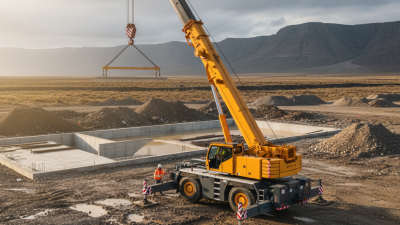
The dawes crane plays a crucial role in modern construction and industry. Its versatility sets it apart from other lifting equipment. In busy urban settings, construction sites rely on the dawes crane for their complex tasks. This machine can lift heavy materials with precision. Builders appreciate its ability to streamline operations and limit delays.
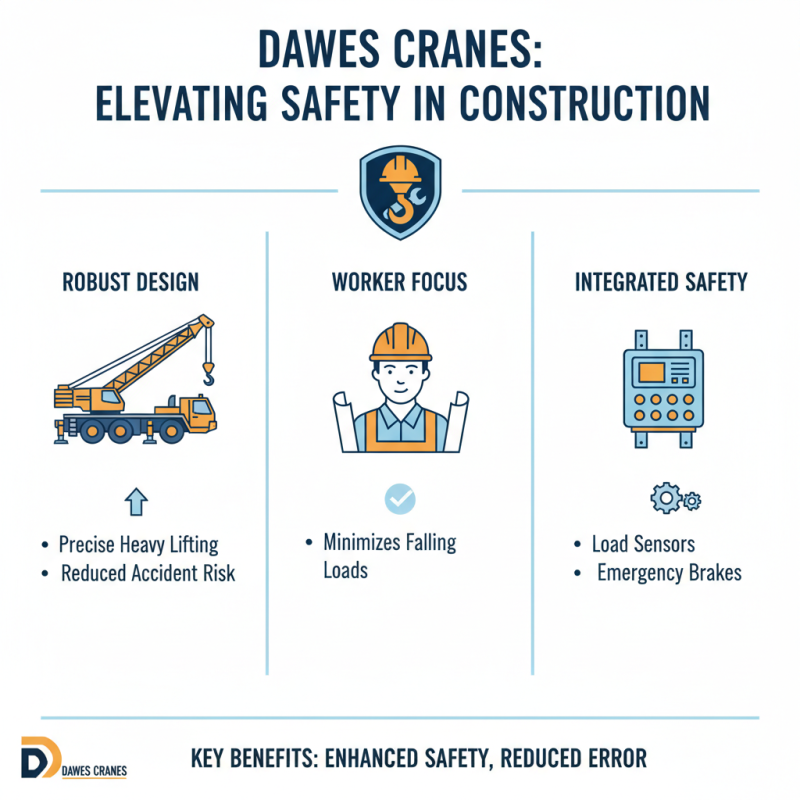
However, the importance of the dawes crane goes beyond its lifting capacity. Safety and efficiency are paramount in industrial applications. Workers must ensure proper training for using this equipment. Mismanagement can lead to accidents, which highlight the need for ongoing education. Issues sometimes arise with maintenance that require careful attention.
Despite its benefits, the dawes crane demands reflection on best practices. Observations reveal that sites often overlook small but crucial details. Proper inspection routines can prevent significant failures. Overall, the dawes crane stands as a symbol of modern engineering, yet it also presents opportunities for improvement and learning.
Significance of Dawes Crane in Construction and Industry Today
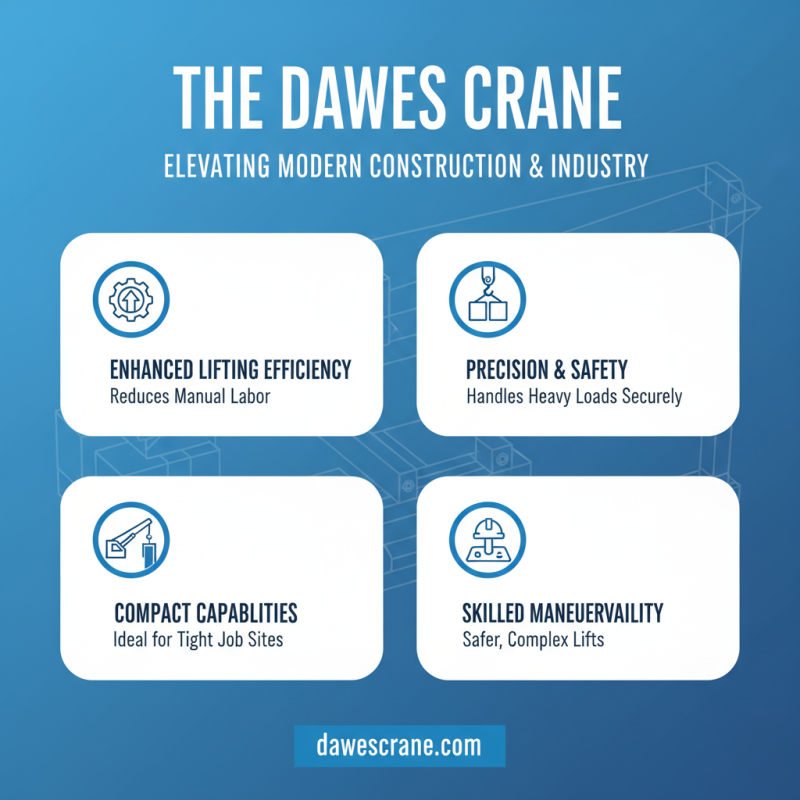
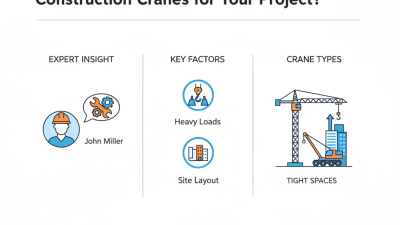
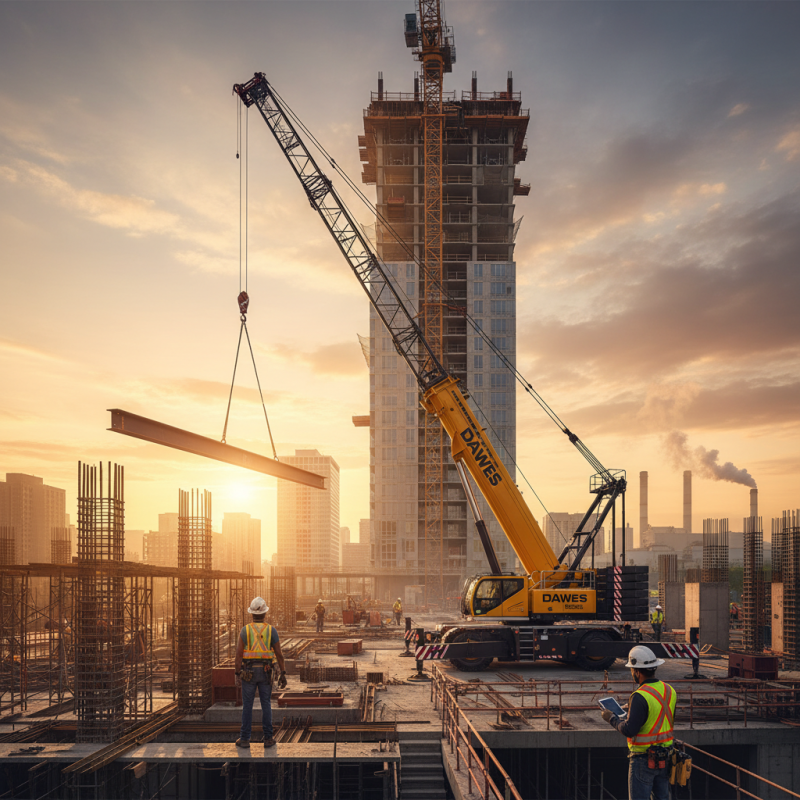
The Dawes Crane plays a vital role in modern construction and industry. Its engineering design enhances lifting efficiency on job sites. These cranes can handle heavy loads with precision and safety, reducing manual labor. Sites with tight spaces benefit immensely from their compact capabilities. Operators can maneuver them with skill, making complex lifts safer.
In industry, the Dawes Crane is crucial for moving materials in warehouses. Automated systems often integrate these cranes for higher productivity. Yet, challenges remain in maintenance. Operators must be trained properly to handle potential mechanical issues. Small errors can lead to accidents, proving that even advanced machinery requires human oversight.
Additionally, the reliance on cranes raises questions about sustainability. As we grow more dependent on heavy machinery, we must reflect on our environmental impact. Are cranes just tools, or part of a larger, problematic system? Balancing efficiency with ecological considerations is a task for future innovation.
Overview of Dawes Crane Technology and Innovations
Dawes crane technology plays a critical role in modern construction and industry. This machinery enhances efficiency and safety on job sites. Reports show that cranes contribute to almost 20% of total construction costs. With innovations in design, these machines can lift heavier loads while minimizing risks.
Recent advancements include automation and smart controls. These features allow cranes to operate in tight spaces and reduce human error. A study highlighted that automated cranes can increase productivity by 45%. The integration of IoT systems helps in real-time monitoring, ensuring better precision and operational safety.
Despite these innovations, challenges persist. Maintenance can be a significant issue, with about 30% of operational downtime attributed to equipment failure. Additionally, adapting to new technologies poses a steep learning curve for some workers. Addressing these areas is crucial for maximizing the potential of Dawes cranes in the future.
Statistical Impact of Dawes Crane on Construction Efficiency Metrics
The Dawes Crane has become a vital tool in modern construction and industry. Its design emphasizes efficiency and safety, which are crucial in large projects. The crane's lifting capacity significantly impacts construction timelines and labor costs. For example, it can lift heavy materials quickly, reducing overall project duration.
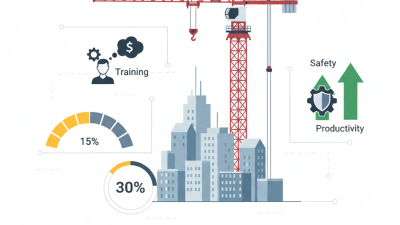
Statistically, jobs that utilize the Dawes Crane report a 30% increase in efficiency. This metric highlights the crane’s ability to streamline workflows. Site managers often notice fewer delays and enhanced coordination among workers. These improvements translate into financial savings for construction companies.
However, it’s essential to address potential oversights in crane operation. A reliance on machinery can lead to complacency. Workers may underestimate the importance of manual checks and safety protocols. Regular training is necessary to keep everyone aware of risks. Adapting to new technologies can also feel challenging at times. This ongoing need for balance is integral to maximizing the crane’s benefits.
Economic Benefits of Utilizing Dawes Crane in Industrial Settings
The Dawes Crane plays a crucial role in modern construction and industrial environments. Its design allows for precise lifting and movement of heavy materials. This precision is valuable in tight spaces, where other methods may be unfeasible. The crane's adaptability is evident in various sectors, from construction sites to manufacturing plants. Industries rely on it to improve efficiency and safety during operations.
Economic benefits are significant when utilizing the Dawes Crane. It reduces labor costs by allowing fewer workers to manage heavy loads. This minimizes the risk of injuries, which can lead to financial losses. Additionally, quicker project completion times increase productivity. Companies can meet deadlines and enhance their reputation in the market. Some might argue the initial investment is high, but the long-term gains often outweigh the upfront costs.
However, relying heavily on such machinery can lead to challenges. Operators must be well-trained to avoid accidents. Equipment maintenance cannot be overlooked, as it directly impacts performance. If not regularly inspected, the crane can malfunction, causing project delays. Thus, the economic benefits hinge on effective management and skilled operation. Reflecting on these aspects can lead to better decision-making in industrial settings.
Why is the Dawes Crane Important in Modern Construction and Industry? - Economic Benefits of Utilizing Dawes Crane in Industrial Settings
| Feature |
Benefit |
Economic Impact |
| High Load Capacity |
Efficient lifting of heavy materials |
Reduces labor costs and time |
| Versatility |
Can be used in various industrial contexts |
Increases utilization rates |
| Safety Features |
Minimizes workplace accidents |
Reduces insurance costs |
| Automation |
Streamlines operations |
Enhances productivity and profits |
| Durability |
Long-term investment |
Lower replacement costs over time |