What is a Luffing Crane and How Does it Work?
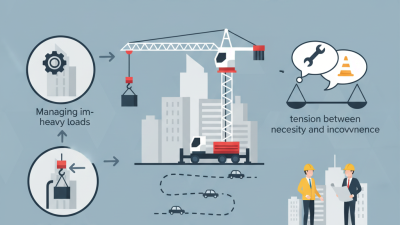
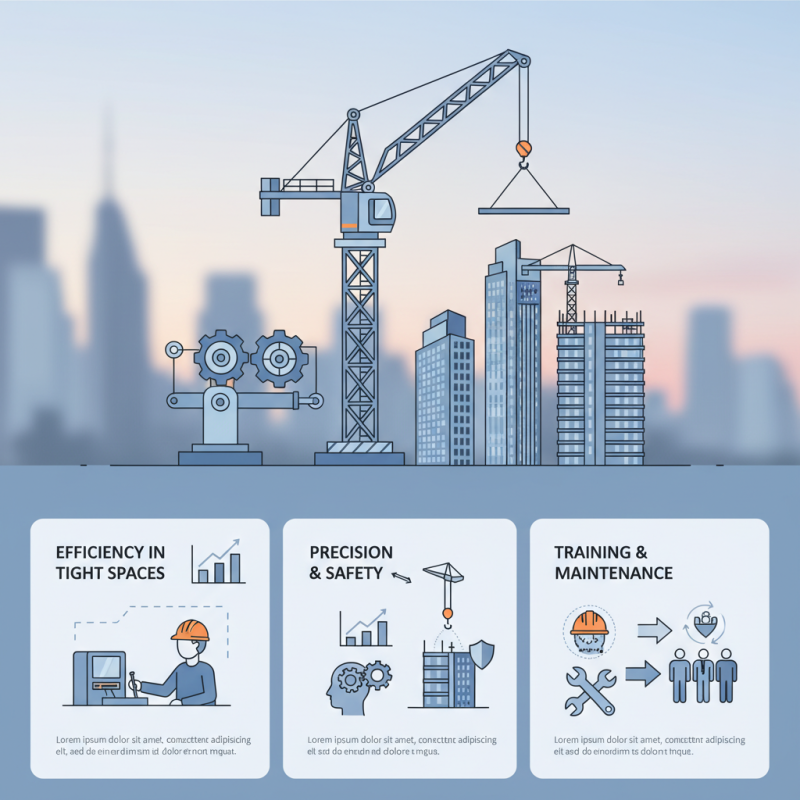
Luffing cranes play a crucial role in modern construction. These machines provide flexibility and efficiency in tight spaces. According to a report by the International Journal of Heavy Machinery, luffing cranes can improve productivity by up to 30%. This efficiency is vital in urban developments where space is limited.
Industry expert John Davis, a leading engineer in heavy lifting, states, "Luffing cranes are game-changers for urban projects." Their unique design allows operators to maneuver loads with precision. This capability minimizes risks associated with high-rise construction. However, the complexity of their operation demands careful training and maintenance.
Despite their advantages, luffing cranes come with challenges. Operating these machines requires skilled personnel who understand their mechanics thoroughly. A lack of training could lead to accidents and financial losses. Therefore, investing in operator education is crucial. Luffing cranes are not just machines; they are integral components that demand respect and knowledge.
What is a Luffing Crane?
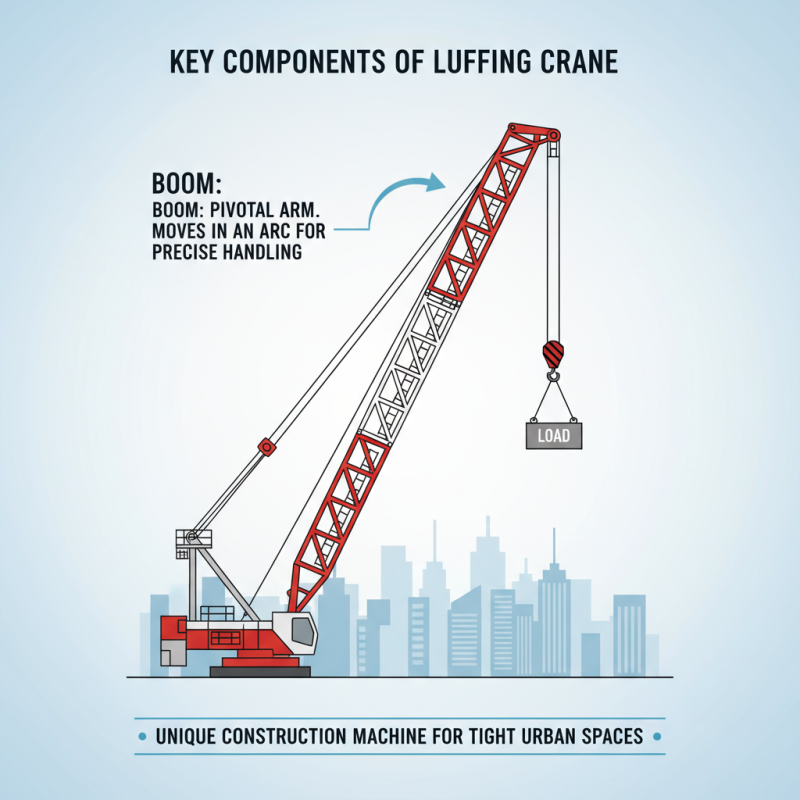
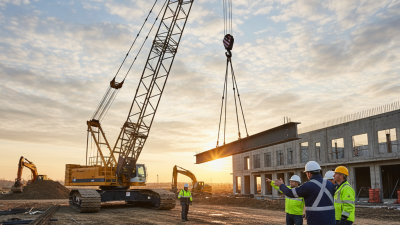
A luffing crane is a type of construction crane commonly used in tight spaces. It features a unique arm design that allows for vertical and horizontal movement. This is particularly useful on crowded job sites where the crane must maneuver around buildings.
The luffing action helps in lifting heavy loads. It can lower and raise its arm without needing to move the base. This means it can work close to a wall or other structures. Many operators appreciate this flexibility, but it does come with challenges. The crane’s movement can be complex. Those operating it need experience and skill.
While luffing cranes are effective, they have limitations. They require careful planning and positioning. If not placed correctly, they can block traffic or reduce workspace. Operators must also be aware of the loads being lifted. Overloading can lead to accidents. This makes training and experience vital for safe operation. Real-world experience often reveals unforeseen issues. Learning from these moments is essential in mastering luffing crane operations.
Luffing Crane Load Capacity by Type
Mechanism of Luffing Motion
Luffing cranes are essential in construction, especially in tight spaces. They can move their booms up and down. This ability allows for versatile maneuvering and positioning of loads. The mechanism of luffing motion is intricate yet fascinating. A luffing crane uses a jointed arm called a boom. The boom pivots around a fixed point, changing the angle to lift materials.
This motion is controlled by hydraulic systems that enable precise adjustments. Reports indicate that luffing cranes can reduce the need for additional operating space by 20%. By changing the boom angle, operators can navigate around obstacles more efficiently. This is crucial in urban areas where space is limited.
However, the design can pose challenges. The complexity of the hydraulic systems may lead to maintenance issues. Operators must be trained to handle these cranes effectively. Data shows that 15% of crane accidents result from operator error. Ensuring proper training can mitigate risks and improve efficiency. Creating awareness of potential errors in operation is critical in preventing accidents.
Applications of Luffing Cranes in Construction
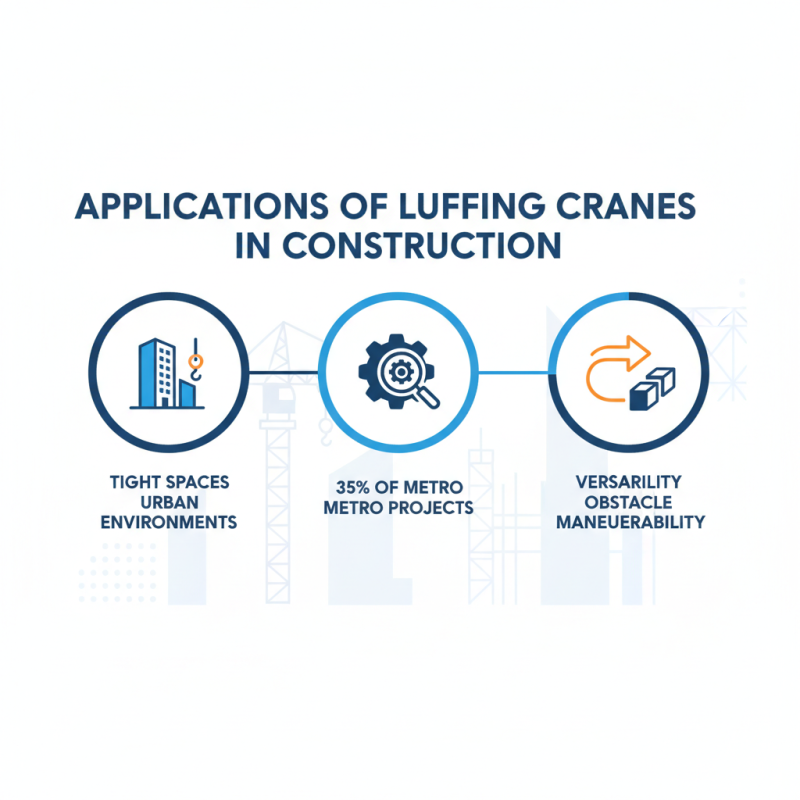
Luffing cranes are becoming increasingly essential in the construction industry. Their unique ability to operate in tight spaces makes them ideal for urban environments. According to recent industry reports, approximately 35% of construction projects in metropolitan areas utilize luffing cranes. This tool's versatility allows it to easily maneuver around obstacles.
The applications of luffing cranes are diverse. They excel in high-rise building projects where vertical lifting is critical. In crowded job sites, their compact design and reduced swing radius minimize disruption. For example, a luffing crane can lift heavy loads over shorter distances without the risk of colliding with adjacent structures. This capability can enhance project efficiency. Challenges arise, however, due to the crane's dependence on precise positioning and operator skill. Training is crucial here.
Moreover, luffing cranes contribute significantly to safety standards. Data from construction safety audits show that sites employing these cranes report 20% fewer accidents. This is partly due to their enhanced visibility and control. Nonetheless, the complexity of operating luffing cranes can lead to operator errors. Continuous education and hands-on training remain vital in maximizing their effectiveness.
Advantages and Limitations of Luffing Cranes
Luffing cranes are known for their flexibility and maneuverability. They are especially useful in tight spaces, like urban construction sites. Their ability to lift loads without extending their boom far from the center of the base is a significant advantage in restricted areas. This skill reduces the risk of accidents and enhances safety.
However, luffing cranes come with limitations. They require skilled operators to manage their complex controls effectively. The cranes also tend to have a lower lifting capacity compared to traditional tower cranes. This means they may not be suitable for all projects, especially those needing heavy lifting. The setup and dismantling process can be time-consuming, which adds to project delays.
While luffing cranes offer unique advantages, they aren't always the best choice. Their operational cost can be higher than expected. Factors such as wind conditions and site layout can impact their efficiency. Therefore, careful consideration is essential when deciding to use a luffing crane. Balancing their benefits and drawbacks is crucial for successful project outcomes.
What is a Luffing Crane and How Does it Work? - Advantages and Limitations of Luffing Cranes
| Feature |
Description |
| Definition |
A luffing crane is a type of tower crane where the jib (the horizontal arm) can be raised and lowered to change the angle relative to the ground. |
| Mechanism |
The luffing motion is controlled by hydraulic or electric motors that adjust the angle of the jib, allowing for precise positioning of the load. |
| Advantages |
Ideal for confined spaces as the jib can be raised and lowered without extending outward, minimizing the swing of the load. |
| Limitations |
Generally has a smaller lifting capacity compared to other cranes and may require more intricate operator training. |
| Applications |
Commonly used in urban construction projects, particularly in areas with restricted height or space. |
| Safety Features |
Includes overload protection, limit switches for jib movement, and emergency stop functions. |
| Cost |
Usually more expensive to rent and operate compared to conventional tower cranes due to their complexity and technology. |