2026 How to Operate a Rough Terrain Crane Safely and Efficiently?
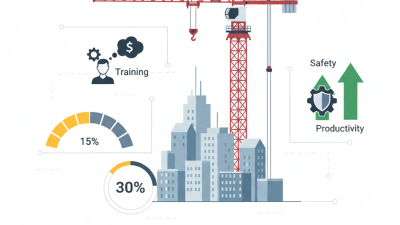
Operating a rough terrain crane comes with unique challenges. These machines are built for off-road conditions but still require proper handling. According to industry reports, accidents in crane operations account for approximately 20% of all construction-related fatalities. This statistic underscores the importance of safe operational practices.
Workers must understand the capabilities and limitations of rough terrain cranes. These machines can lift heavy loads, but uneven surfaces can lead to instability. A report by the National Institute for Occupational Safety and Health highlights that improper setup or operation can escalate risks. It's essential for operators to receive thorough training.
Reflecting on past incidents can provide valuable lessons. Inadequate communication and lack of situational awareness contributed to many accidents. Addressing these factors can enhance safety and efficiency. Thus, focusing on rigorous training and regular safety audits is crucial for preventing mishaps and ensuring smooth operation.
Understanding Rough Terrain Cranes: Key Features and Functions
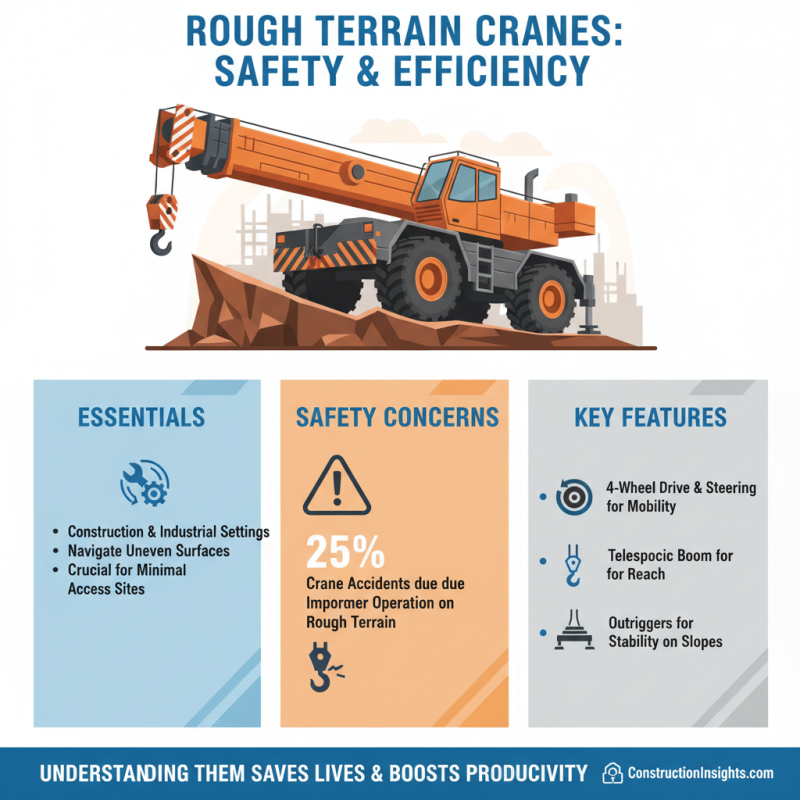
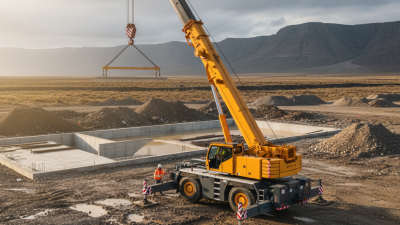
Rough terrain cranes are essential in construction and industrial settings. They are designed to navigate uneven surfaces. This feature is crucial for job sites with minimal access. According to industry reports, nearly 25% of crane accidents occur due to improper operation on rough terrain. Understanding their key features can enhance safety and efficiency.
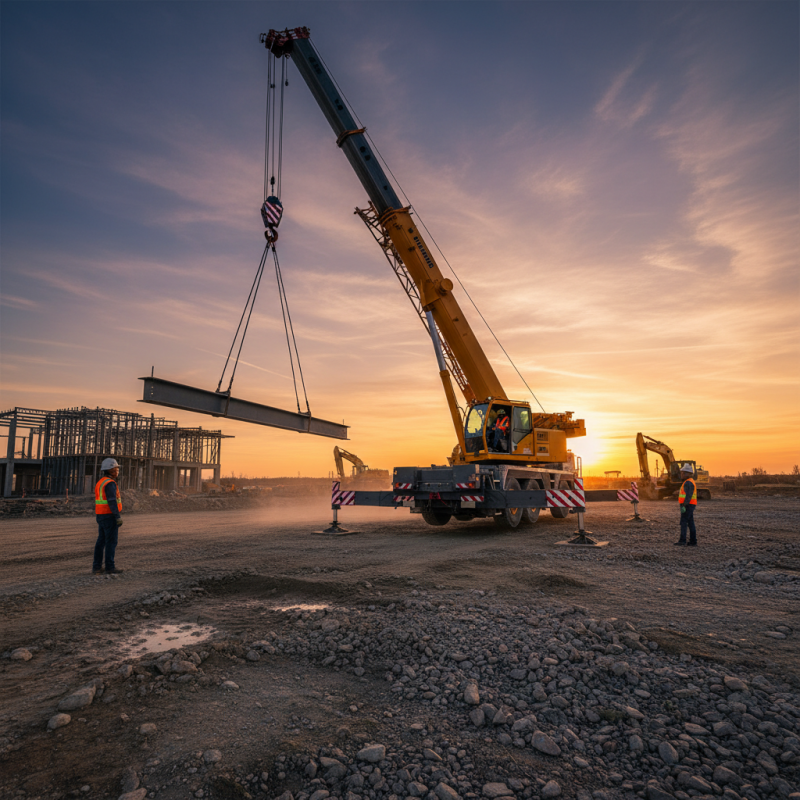
These cranes come equipped with large, rugged tires and powerful engines. They often have extended reach and high lifting capacities. For instance, many models can lift loads exceeding 20 tons. Operators must be trained to fully leverage these capabilities. Mobility is critical. A well-trained operator can navigate obstacles while maintaining load stability.
However, even with training, challenges remain. Operators might underestimate ground conditions. They need to assess soil stability before moving. Inadequate understanding of these aspects can lead to accidents. Regular maintenance ensures reliability. Weak points, if overlooked, can pose serious risks. Awareness and continuous learning are vital for safe operation.
Pre-Operational Safety Checks and Inspections for Rough Terrain Cranes
Before operating a rough terrain crane, pre-operational safety checks are essential. According to industry standards, nearly 70% of crane accidents can be prevented with proper inspections. Operators must check fluid levels, brakes, and steering systems. Inspecting tires for proper inflation is critical. Underinflated tires can increase rollovers and decrease handling.
Environmental conditions also play a significant role. Operators must assess the ground's stability. Uneven terrain can lead to accidents, so inspecting the area for obstacles is vital. Many reports indicate that inadequate site assessments contribute to over 30% of crane-related incidents. Simple actions, like checking for overhead power lines, can save lives.
Despite knowing these checks, not all operators follow procedures. A recent survey revealed that about 40% of operators admit to skipping pre-operational checks due to time pressures. This is concerning. Operators must understand that neglecting safety can lead to severe consequences. Regular training on safety protocols should be mandatory. Safety isn’t just about numbers; it’s about protecting lives.
Effective Load Management and Stability Practices in Crane Operations
Operating a rough terrain crane requires careful attention to load management and stability. Proper load management is crucial for safety. Load limits must be consistently reviewed. Operators should clearly understand the crane's capacity. They need to consider the terrain. Soft or uneven ground can significantly impact stability. Before lifting, inspect the load and its balance. Any miscalculation can lead to accidents.
Stability practices are just as essential. Operators must ensure the crane is positioned on stable ground. Cranes should be level before any operation begins. Use outriggers to enhance stability when available. Watch for environmental factors like wind or rain. These can alter lift capabilities. Training sessions should include real-life scenarios. Reflecting on past experiences helps to avoid future mistakes. Continuous learning is vital for safe operations. Every operation is an opportunity for improvement.
Load Management and Stability Practices in Rough Terrain Crane Operations (2026)
Best Practices for Navigating Rough Terrain and Job Sites Safely
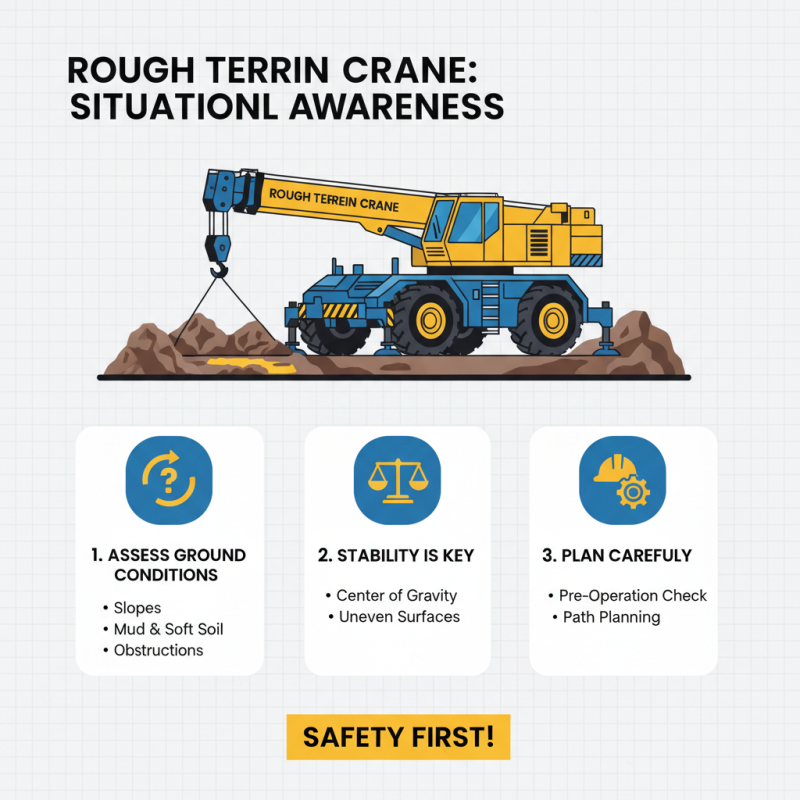
Operating a rough terrain crane requires keen awareness of your surroundings. Navigating challenging job sites demands careful planning. Before starting, assess the ground conditions thoroughly. Look for slopes, mud, and obstructions. These factors can affect stability. The crane's center of gravity is crucial when moving over uneven surfaces.
Communicate effectively with your team. Use clear signals when repositioning the crane. Sometimes, assumptions can lead to mistakes. Always ensure that everyone knows their roles. Additionally, regularly inspect the crane. Ensure all safety features are functioning properly. Neglecting minor issues can lead to major problems.
Practice makes perfect, but overconfidence can be dangerous. Each job site presents unique challenges. Reflecting on past experiences helps improve safety. Be open to feedback from your crew. Adjust your techniques based on their insights. Learning is an ongoing process. Embrace it, and operate with caution.
Emergency Procedures and Protocols for Rough Terrain Crane Operators
Emergency procedures are crucial for rough terrain crane operators. When an unusual situation arises, quick and effective actions can make all the difference. According to the National Safety Council, about 70% of crane accidents are due to operator error or lack of proper training. This highlights the need for clearly defined emergency protocols.
A common emergency is a tipping incident. Operators should know how to react immediately. They must remain calm and assess the situation quickly. In many cases, emergency brakes can stabilize the crane. Workers nearby should follow evacuation procedures swiftly, maintaining a safe distance. Keeping the emergency contact numbers visible is also necessary.
Operators should conduct regular drills. These drills help solidify responses to unexpected scenarios. Training sessions can improve teamwork and communication. Recommended standards suggest conducting these drills at least every six months. However, many sites fall short. The lack of practice creates gaps in response efficiency. Regularly reviewing and updating procedures can prevent failures in actual emergencies.
2026 How to Operate a Rough Terrain Crane Safely and Efficiently? - Emergency Procedures and Protocols for Rough Terrain Crane Operators
| Procedure |
Description |
Importance |
Action Steps |
| Pre-Operation Inspection |
Ensure crane is in safe working condition before use. |
Prevents accidents due to equipment failures. |
Check fluid levels, brakes, tires, and load chart compliance. |
| Load Calculation |
Calculate the weight of the load and ensure it does not exceed the crane's capacity. |
Safeguards against tipping or overloading. |
Use load charts, accounting for lift radius and boom length. |
| Operator Weighing |
Ensure only trained and certified operators are in control. |
Maximizes safety and compliance with regulations. |
Verify operator's certifications and skills regularly. |
| Emergency Procedures |
Established actions to take in the event of an emergency. |
Minimizes harm and damage during unexpected incidents. |
Develop clear evacuation and communication plans. |
| Post-Operation Assessment |
Evaluate operation performance and crane condition. |
Enhances future safety measures and operational efficiency. |
Document findings and report any issues immediately. |