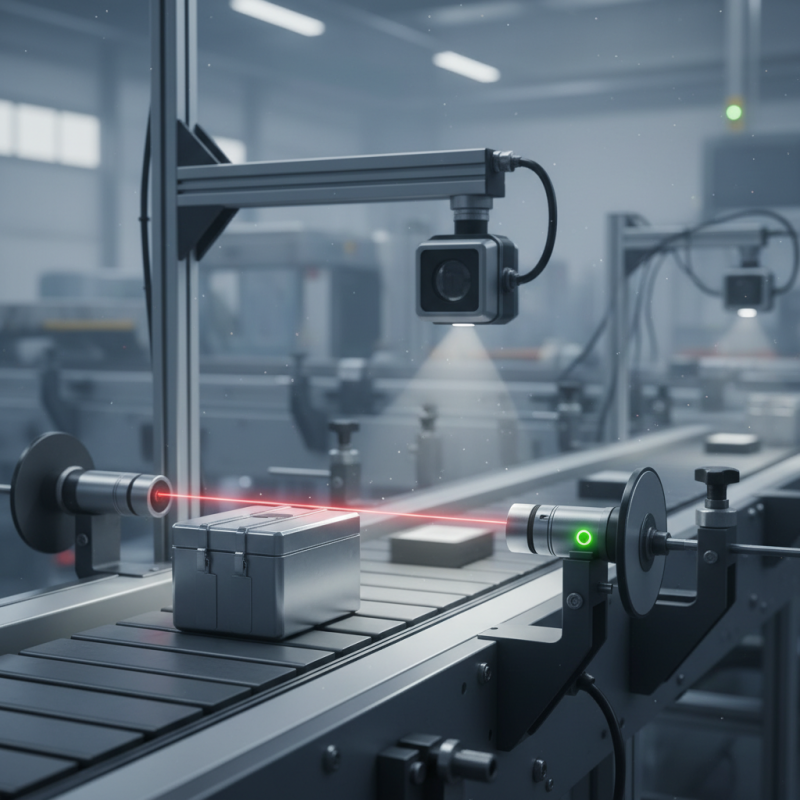
What is a Photoelectric Sensor and How Does it Work?
Photoelectric Sensors are essential devices in various industrial applications. They detect the presence of an object without physical contact. This unique feature makes them invaluable for automation and control processes.
The basic principle of Photoelectric Sensors relies on light. These sensors use a light source, often a laser or LED, and a receiver. When an object interrupts the light beam, the sensor detects it. This technology has revolutionized safety and efficiency in industries.
However, it is important to understand that not all Photoelectric Sensors are the same. Different types are suited for specific tasks. Users must choose wisely, considering the environment and requirements. There can also be challenges in performance under certain conditions, such as dust or fog. Understanding these limitations can lead to better decision-making.
What is a Photoelectric Sensor?
A photoelectric sensor is a device that detects the presence of objects or changes in the environment using light. These sensors rely on a beam of light, usually infrared, to operate. When an object interrupts the light beam, the sensor activates an output action. This makes them crucial in various applications like industrial automation, safety systems, and counting objects.
One key advantage of photoelectric sensors is their non-contact operation. They can detect objects without physical touch, helping to maintain the integrity of both the sensor and the objects being detected. However, they can sometimes misinterpret reflections or shadows. It's essential to test their positioning carefully. Irritatingly, in some conditions, dirt or dust can obstruct the light path and lead to faulty readings.
Tips: Ensure proper alignment of these sensors for accurate performance. Regular cleaning is vital. If you notice inconsistent readings, consider repositioning or recalibrating the sensor. Understand that sometimes external factors can play a significant role in sensor performance.
Types of Photoelectric Sensors and Their Applications
Photoelectric sensors are vital in various industries. They detect objects or changes in the environment using light. Different types serve various applications.
Retro-reflective sensors are popular. They use a light source and a receiver. When an object interrupts the beam, it triggers the sensor. These sensors are commonly used in packaging and material handling.
Through-beam sensors are another option. They consist of a separate light emitter and receiver. When an object passes between them, it is detected. These are beneficial in safety applications, preventing accidents on conveyor belts.
Tip: Always analyze the environment before selecting a sensor type. Factors like distance and background influence performance.
Diffuse sensors combine the emitter and receiver. They reflect light off the object. These sensors are compact and easy to install. Ideal for close-range detection in assembly lines.
Remember to consider the sensor’s response time and range. Sometimes, installations may not fit every scenario, leading to ineffective detection. Always test before finalizing the setup.
Tip: Schedule regular maintenance checks to ensure sensors function efficiently. Regular upkeep can prevent unexpected failures.
Photoelectric Sensor Types and Their Applications
How Photoelectric Sensors Work: The Basic Principles
Photoelectric sensors are essential in automation and control. They operate on the principle of detecting changes in light levels. These sensors emit a light beam, which is disrupted when an object enters its path. This interruption triggers an output signal. Various types of photoelectric sensors exist, including through-beam, retroreflective, and diffuse types. Each has its specific application based on distance and environment.
Industry data shows that the global market for photoelectric sensors is expected to grow significantly. In 2022, the market was valued at approximately $2.3 billion, with projections reaching about $3.5 billion by 2028. This growth highlights the increasing demand across various sectors. For instance, material handling and packaging industries heavily rely on these sensors for efficiency.
Despite their benefits, photoelectric sensors can face challenges. For example, environmental factors like dirt or fog may affect their performance. Additionally, constant exposure to intense light can lead to false readings. Engineers must carefully select and install these devices to minimize such issues. Understanding the operating principles is crucial for proper integration into systems.
Common Uses of Photoelectric Sensors in Industry
Photoelectric sensors are crucial in many industrial applications. They detect objects without direct contact. This non-contact sensing can improve safety and efficiency. Common uses include automation, packaging, and material handling.
In manufacturing, photoelectric sensors control assembly lines. They ensure items are in place before machinery operates. This prevents accidents and jams. These sensors detect everything from small components to large packages. They are vital in sorting systems. Items move quickly, and sensors help maintain the flow.
Tips: Regularly check sensor alignment. Misalignment can cause false readings. Maintain cleanliness; dirt can obstruct the sensor's path. Also, consider ambient light conditions. Bright lights may interfere with readings. Adjust sensitivity accordingly.
In packaging, photoelectric sensors help monitor fill levels. They ensure products are filled accurately. An empty container can slip by unnoticed. This can lead to wastage and high costs. The sensors alert operators if something goes wrong.
Using sensor feedback in real-time can enhance operation. Automated systems benefit significantly from this setup. Reliable data helps in making informed decisions. Keep in mind, however, that sensor failure can happen. Regular maintenance is essential to prevent unexpected downtimes.
What is a Photoelectric Sensor and How Does it Work? - Common Uses of Photoelectric Sensors in Industry
| Dimension | Description |
| Type | Proximity, Retroreflective, Through-beam |
| Operating Principle | Light interruption or reflection detection |
| Detection Range | Up to 10 meters, depending on the sensor type |
| Response Time | Typically less than 1 ms |
| Power Supply | 10-30 VDC or 24 VAC options available |
| Common Applications | Automated assembly lines, Packaging machinery, Material handling systems |
| Advantages | Non-contact detection, High speed, Versatile in various environments |
| Limitations | Sensitivity to dirt and obstructions, Limited effective range based on type |
Advantages and Limitations of Photoelectric Sensors
Photoelectric sensors play a crucial role in automation. They detect objects without physical contact. However, they come with advantages and limitations.
One major advantage is their accuracy. According to a report by Allied Market Research, the photoelectric sensor market is projected to reach $2.85 billion by 2027, highlighting their growing importance in various industries. They can work in challenging environments like dust or dirt. This makes them reliable for quality control in manufacturing. Their non-contact nature reduces wear and tear, leading to longer lifespans.
On the downside, photoelectric sensors can be affected by factors like ambient light. Direct sunlight can impact their performance. They also have limitations in detecting transparent objects. These sensors might not work well with shiny surfaces, leading to false readings. Testing under various conditions is crucial. Sometimes, additional technology is required to complement their functionality. This raises costs, which may deter some businesses from using them.