
A clean wheel finish depends on more than a sharp diamond tool. The machine must hold the rim securely, cut consistently, and suit the wheel sizes in your shop. This guide introduces ten Wheel Diamond Cutting Machine options currently offered for sale. It focuses on practical details buyers can compare, rather than relying on bold claims or polished product photos.
Look closely at supported rim diameters, spindle controls, clamping design, tool compatibility, and the availability of technical support. A clear display and straightforward setup can matter during a busy shift. So can repeatable cuts. Ask sellers for specifications, operating demonstrations, warranty terms, and service information before making a decision. Details matter.
The right choice depends on your workload, operator experience, available floor space, and maintenance capacity. A high feature count does not automatically mean a better fit. Some listings may leave important specifications unclear; treat that as a reason to ask questions, not to guess. The following overview offers a starting point for comparing machines and identifying which details deserve closer review.
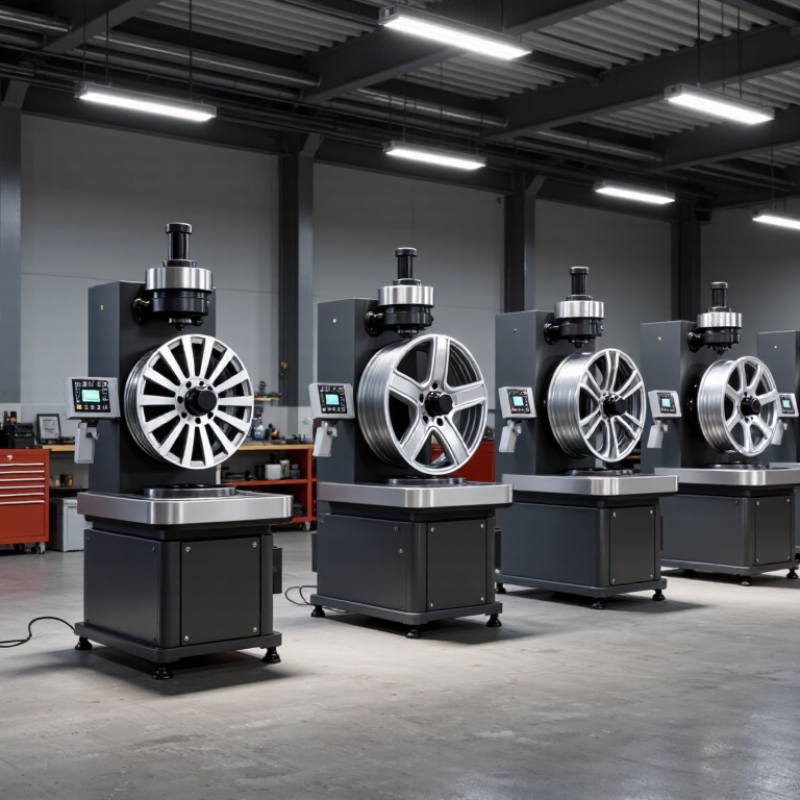
A wheel diamond cutting machine is a precision lathe designed to refinish the visible face of certain alloy wheels. It uses a diamond-tipped cutting tool to remove a very thin layer of metal, creating fine, even lines across the machined surface. The aim is to restore the wheel’s original finish after scuffs or surface wear, not to reshape a bent rim or repair structural damage.
The wheel is secured and centered before cutting. Many machines scan its contours, then guide the tool along the face, following the wheel’s curves. A technician still needs to check the setup and judge how much material can safely be removed. Small details matter: a poorly centered wheel can produce uneven rings, while an overly deep cut may leave too little surface for future refinishing.
Not magic.
Diamond cutting also cannot replace missing metal or make every wheel suitable for machining. The coating and wheel condition should be assessed before work begins. A fresh finish can look striking under workshop lights, but the removed metal cannot be put back. There is a trade-off, and sometimes the sensible choice is to leave a minor mark alone.
How Wheel Diamond Cutting Machines Work
A wheel diamond cutting machine restores a precise finish by removing a very thin layer from a wheel’s face. The wheel is secured to a spindle, then rotated at a controlled speed. A sharp, diamond-tipped cutting tool moves across the surface along a programmed path. On many machines, a probe or scanning system records the wheel’s shape before cutting begins. That measurement helps the operator set the tool path and avoid cutting too deeply.
The process often starts with a light test pass. The operator checks the cut, adjusts the settings if needed, and then machines the visible face in controlled passes. Tiny metal curls collect near the cutting area, so proper extraction and a clean workspace matter. Small details matter. A poorly centered wheel can produce uneven lines, even when the machine is well set up. The finished surface should be inspected for consistent grooves, missed areas, and remaining damage. Not every wheel is suitable for another cut; repeated machining can reduce material thickness. That limit deserves honest attention, not guesswork.
A diamond cutting wheel rotates to create the cutting action. This chart shows how rotational speed affects the wheel’s rim speed for a reference 100 mm diameter wheel, calculated using rim speed = π × diameter × RPM ÷ 60. These values illustrate the relationship; they are not operating recommendations.
Wheel diamond cutting machines generally fall into CNC lathe and multi-axis CNC configurations. A lathe-style machine rotates the clamped wheel while a diamond tool removes a thin layer from the face. Multi-axis systems add tool movement for varied spoke shapes and profiles. Some models include a probe or scanner to map the wheel before cutting; others rely more on operator measurement. Setup matters.
OICA reported 93.5 million motor vehicles produced worldwide in 2023, showing the scale of the automotive manufacturing sector. This figure does not measure demand for wheel cutting machines, but it provides useful industry context.
When comparing machines, check wheel-size capacity, spindle stability, clamping range, scanning accuracy, software controls, and chip or coolant handling. A rigid fixture helps reduce vibration and uneven cuts. Automated scanning can speed up profiling, though operators still need to verify the wheel’s condition and the scan.
Tips: Ask for a sample cut on a wheel with similar spoke geometry. Check the finished surface under bright, angled light. Confirm training and service support, too. Small setup errors show quickly. Don’t rely on the brochure alone.
When comparing the top 10 wheel diamond cutting machines for sale, judge the working setup, not just the advertised cutting speed. Options may include compact bench machines, bridge-style cutters, CNC contour systems, multi-blade units, and machines with adjustable feed or coolant delivery. Match the spindle range, wheel diameter, cutting depth, and fixture size to your actual workpieces. A test cut matters. Check the edge under bright light for chipping, then note how much dressing or rework it needs.
Consumable supply also affects running costs. The USGS Mineral Commodity Summaries 2024 estimated global synthetic industrial-diamond production at roughly 15 billion carats in 2023. That figure describes industrial diamond output, not machine quality or the share suitable for cutting wheels. Still, it underlines why abrasive specification matters: bond type, grit size, and wheel concentration can change finish and tool life. Ask sellers for a sample-cut report and a clear explanation of recommended wheel settings.
Inspect practical details before buying: guard coverage, coolant flow, clamping stability, and access for wheel changes. A thin workpiece can vibrate even when the machine looks substantial. Request measured repeatability, not only a catalog tolerance, and confirm what material and wheel were used for the test. I would not rank a machine from speed claims alone; those numbers can hide rough edges and costly finishing work.
Choosing a wheel diamond cutting machine starts with the wheels you actually handle, not the largest number in a brochure. Measure common rim diameters, widths, and offsets in your workshop. Check that the chuck and adapters support them securely. A wheel that sits off-center can produce uneven cuts and waste a finished surface. Small details matter.
Look beyond headline spindle speed. Ask about spindle runout, usable cutting depth, tool compatibility, and repeatable positioning. A clear control interface helps operators set measured passes instead of guessing. Inspect the guarding, emergency stop, and coolant arrangement in person. Coolant should reach the cutting zone without flooding the work area. Request a demonstration on a comparable wheel, then inspect the finish under angled light for chatter marks or uneven lines. Ask for proof.
Price the full setup, including installation, electrical requirements, tooling, adapters, training, and routine service. Confirm what wear parts cost and how quickly support can respond. A lower purchase price may be less attractive if setup takes days or replacement components are hard to source. There is no perfect spec sheet. One sample cut cannot prove long-term reliability, and operator skill affects results. Ask for references from shops with similar workloads, then compare actual cycle times with the estimates.
| Rank | Machine Configuration | Typical Work | Automation | Key Advantages | Factors to Check Before Buying | Best Suited For |
|---|---|---|---|---|---|---|
| 1 | CNC alloy-wheel diamond-cutting lathe | Machining the front face of compatible alloy wheels to create a bright, turned finish. | CNC-controlled cutting cycle; setup and loading requirements vary by model. | Repeatable tool movement and consistent machining when the wheel is correctly mounted. | Confirm supported wheel dimensions, workholding method, control functions, safety enclosure, and local service availability. | Wheel repair shops and specialist refinishing businesses. |
| 2 | CNC lathe with automatic wheel measurement | Diamond-cut wheel refinishing where the machine measures wheel geometry before machining. | Includes an automated or assisted measurement step; the degree of automation is model-specific. | Measurement support can help establish a cutting path for wheels with varying face profiles. | Ask how measurement is performed, what profiles are supported, and whether operator verification is required. | Shops handling a varied mix of wheel designs. |
| 3 | CNC wheel lathe with manual setup | Controlled face cutting after the operator mounts and positions the wheel and sets the job. | CNC cutting with hands-on setup. | Offers programmable machining while retaining direct operator control over setup. | Review setup time, clamping access, control usability, training needs, and the machine’s documented work envelope. | Small to medium workshops with trained operators. |
| 4 | CNC wheel lathe with assisted loading | Repeated wheel-refinishing jobs where loading assistance is part of the machine configuration. | Some handling steps are assisted; confirm exactly which steps are automated. | May reduce manual handling effort compared with a fully manual loading process. | Check loading limits, floor space, guarding, handling workflow, and whether the system suits your wheel mix. | Businesses seeking to improve throughput and handling ergonomics. |
| 5 | Compact CNC wheel-cutting lathe | Diamond-cut refinishing within the machine’s stated size and capacity limits. | CNC operation; features differ by model. | A smaller footprint can be useful where workshop space is limited. | Verify the maximum wheel size and weight, access for loading, electrical requirements, and clearance for servicing. | Smaller workshops with limited floor space. |
| 6 | Heavy-duty CNC wheel lathe | Machining wheels within a higher-capacity machine’s specified work envelope. | CNC-controlled; capacity and cycle features are model-dependent. | Designed for demanding work within its rated limits. | Check rated wheel dimensions and weight, spindle and clamping specifications, foundation needs, and power supply. | High-volume or commercial workshops processing heavier or larger wheels. |
| 7 | CNC wheel lathe with job-program storage | Repeat work on recurring wheel designs using stored job settings or programs. | CNC with program storage; compatibility and capacity vary. | Stored jobs can make repeat setups easier when wheel types and procedures are consistent. | Ask about program backup, editing permissions, control support, and how jobs are identified and recalled. | Shops that frequently process repeat wheel designs. |
| 8 | CNC wheel lathe with integrated wheel inspection | Wheel machining paired with inspection functions offered as part of a particular system. | Inspection may be integrated, assisted, or separate; confirm the actual functions. | Can help organize machining and quality checks in one workflow. | Determine which measurements are captured, how results are displayed, and whether separate inspection equipment is still needed. | Shops seeking a documented inspection workflow. |
| 9 | CNC wheel lathe with enclosed cutting area | Diamond-cut wheel machining inside a guarded working area. | CNC operation with enclosure features that vary by design. | An enclosure can help contain chips and coolant when used as designed. | Inspect door interlocks, visibility, chip and coolant management, maintenance access, and applicable safety documentation. | Workshops prioritizing contained machining and organized cleanup. |
| 10 | Refurbished CNC wheel-cutting lathe | Wheel-refinishing work within the machine’s original specifications and current condition. | Depends on the machine’s original configuration and any upgrades. | May provide a lower-cost route to CNC capability if condition and support are verified. | Request maintenance records, a live demonstration, control and software details, included tooling, warranty terms, and parts availability. | Buyers balancing initial cost with the need for verified condition and support. |