
China Top Self Erecting Crane Suppliers?
Choosing among China’s top self erecting crane suppliers requires more than comparing prices. A reliable supplier should demonstrate engineering experience, stable production, documented inspections, and responsive after-sales support. Buyers should examine lifting charts, maximum jib length, rated capacity, transport dimensions, erection time, and control-system reliability. A compact crane may look ideal for urban housing projects, yet limited ground access can change the entire decision.
Crane specialist Mike Verhulst once noted, “The best crane is not always the largest one; it is the one matched carefully to the work.” This practical view matters when evaluating a self erecting crane for residential construction, industrial maintenance, or restricted sites. A supplier should explain how its crane performs on uneven ground, in narrow streets, and under changing wind conditions. Real project records are useful. Factory photographs alone are not enough.
This article reviews leading Chinese manufacturers through a practical, evidence-based lens. It considers product quality, customization ability, export experience, spare-parts availability, installation guidance, and technical training. It also looks at whether suppliers provide clear manuals and realistic delivery schedules. Those details often decide project success.
No ranking is perfect. Some suppliers publish stronger technical data than others, while smaller manufacturers may offer flexible customization. That flexibility can help, but it may also create support risks after delivery. Buyers should request factory videos, reference projects, inspection documents, and a complete quotation before signing. A dependable self erecting crane supplier should welcome careful questions, not avoid them.
What Is a Self-Erecting Crane?
China Top Self Erecting Crane Suppliers?
What Is a Self-Erecting Crane?
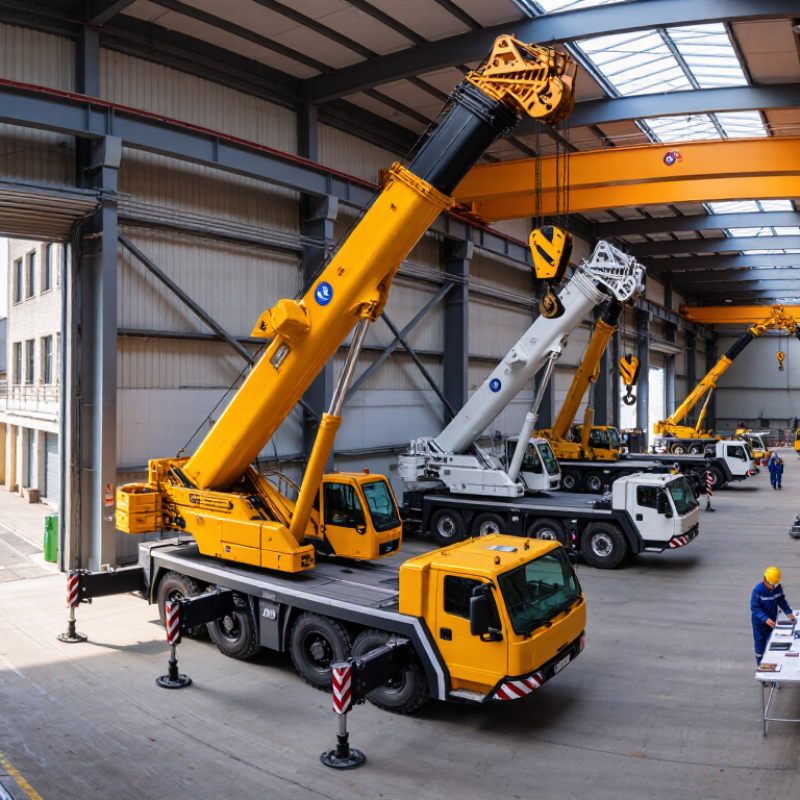
A self-erecting crane is a compact tower crane that unfolds its mast and jib hydraulically or mechanically. It usually arrives on a trailer and needs limited assembly equipment. This makes it practical for housing projects, narrow urban sites, and short construction schedules. Many units offer several tonnes of lifting capacity, but exact performance depends on jib length, radius, and wind conditions.
Grand View Research reported that the global crane market was valued at approximately USD 36 billion in 2023. It also forecasts continued growth through 2030, supported by construction and infrastructure investment. This trend increases interest in equipment that reduces setup time. However, “self-erecting” does not mean risk-free or fully automatic. Operators still need training, ground checks, load charts, and clear communication. The trade-off is easy to underestimate. A small footprint can also limit lifting radius and site flexibility.
Tips: Inspect the ground before positioning the crane. Check maximum radius, ballast requirements, and nearby obstacles. Keep the work zone visibly controlled. Ask suppliers for independent test records, maintenance history, and compliance documents. A useful comparison includes transport height, setup time, rated capacity, and service response. On busy sites, the cheapest offer may create slower work and higher planning pressure.
China Top Self Erecting Crane Suppliers? - What Is a Self-Erecting Crane?
| Data Dimension | Typical Self-Erecting Crane Information | Why It Matters When Selecting a Supplier |
|---|---|---|
| Definition | A tower crane designed to unfold or raise its mast and jib using its own integrated mechanisms, usually without requiring a separate mobile crane for routine assembly. | Clarifies the main difference from conventional tower cranes that generally need external lifting equipment during installation. |
| Typical Maximum Load | Approximately 1–10 tonnes, depending on the crane configuration, jib length, and load chart. | The rated capacity must match the heaviest planned lift, not just the crane’s headline maximum capacity. |
| Maximum Jib Length | Common configurations range from about 20 m to 50 m, with the rated capacity usually decreasing toward the jib tip. | Longer working radii can cover more of a site but may require greater foundation capacity and additional site clearance. |
| Maximum Hook Height | Often approximately 15–35 m in a freestanding setup; greater heights may be possible with approved configurations or structural ties. | The available hook height must accommodate the building height, working clearance, and local airspace restrictions. |
| Self-Erection Method | Hydraulic cylinders, winches, folding frames, or combinations of these systems are used to raise the mast and deploy the jib. | A simple, well-documented erection sequence can reduce setup time and improve job-site safety. |
| Transport Configuration | Many units are designed to travel in folded or compact sections using standard road transport, subject to local dimensions and weight limits. | Transport size, axle load, permits, and access roads directly affect delivery cost and project scheduling. |
| Power Supply | Electrically powered systems are common; required voltage, frequency, phase configuration, and total connected load vary by model. | The available site power must be checked before purchase or rental to avoid delays and unsafe temporary connections. |
| Foundation or Support | Depending on the design, support may use a prepared concrete foundation, ballast system, chassis, or engineered anchoring arrangement. | Ground bearing capacity, overturning resistance, and foundation drawings must be reviewed by a qualified engineer. |
| Control and Safety Systems | Common systems include overload protection, limit switches, emergency stop controls, load indicators, anti-collision functions, and wind-speed monitoring where required. | Safety functions should be verified through manuals, inspections, testing records, and compliance documentation. |
| Wind Operating Conditions | Permitted operating and out-of-service wind speeds are specified by the manufacturer and applicable local regulations; these limits are not interchangeable. | Wind limits affect daily productivity, shutdown procedures, tie-down requirements, and overall site risk management. |
| Best-Fit Applications | Residential construction, low- to mid-rise buildings, renovation projects, precast handling, small industrial sites, and locations with limited access for mobile cranes. | The crane is most valuable where frequent relocation, limited setup space, and moderate lifting requirements are important. |
| Supplier Evaluation Checklist | Compare load charts, erection procedures, structural calculations, inspection certificates, spare-parts availability, operator training, warranty terms, and after-sales technical support. | A complete technical and service comparison is more reliable than evaluating suppliers by price or maximum capacity alone. |
Note: Capacity, dimensions, wind limits, foundation requirements, and electrical specifications vary by crane configuration and jurisdiction. Always confirm the final technical data in the supplier’s certified load chart and installation documentation.
Related Posts
-
China Top 10 Self Erecting Crane Suppliers?
-
How to Choose the Best Self Erecting Crane?
-

How to Choose a Self Erecting Tower Crane in 2026?
-

2025 Top 10 Self Erecting Crane Models Revolutionizing Construction Efficiency
-
2026 How to Choose the Best Tower Crane Rental for Your Project?
-

Why Construction Cranes Are Essential for Modern Building Projects?