How to Choose the Right Dawes Crane for Global Sourcing?

Choosing the right dawes crane for global sourcing requires more than comparing catalogue prices. The correct decision begins with the lifting environment, not the sales quotation. Consider load weight, lifting frequency, span, height, temperature, dust, and available power. A crane working beside a steel furnace faces different demands from one serving a clean warehouse.

David Duerr, a recognized crane engineering author and consultant, states, “A crane is only as good as the information used to specify it.” This principle deserves attention. A precise equipment brief should include duty class, operating hours, control preferences, runway conditions, and expected future loads. Missing one detail can create expensive modifications later.

Look closely at the supplier’s technical drawings. Check motor ratings, brake systems, limit switches, structural calculations, and component brands. Ask for inspection records, factory testing procedures, manuals, spare-parts lists, and operator training plans. Reliable dawes crane sourcing also depends on communication after shipment. Time-zone delays and unclear warranty terms can stop production unexpectedly.

Do not trust a polished brochure alone. Verify references from buyers with similar workloads and climates. Request evidence of quality control and conformity with the destination market’s applicable standards. Local installation support matters, especially when commissioning requires certified technicians.

The cheapest option may become the costliest one. Yet, price is not irrelevant. A realistic total-cost review should include freight, duties, installation, maintenance, energy use, downtime, and replacement parts.

Some assumptions may still be wrong. Recheck them. A successful global purchase balances engineering evidence, supplier transparency, service capability, and long-term operational confidence.
How to Choose the Right Dawes Crane for Global Sourcing?

Define the Lifting Requirements for Your Global Sourcing Project

How to Choose the Right Dawes Crane for Global Sourcing?

Define the lifting requirements before comparing crane suppliers. Record the maximum load, average load, lift height, span, and required travel distance. A 10-ton load is not enough information. Its shape, balance, lifting points, and center of gravity also affect crane selection. Measure the building structure, aisle width, floor capacity, and available headroom. A small measurement error can cause costly redesigns.

Consider the working environment carefully. Dust, humidity, outdoor exposure, temperature changes, and corrosive materials may require different protection levels. Describe the lifting frequency, daily operating hours, and expected duty cycle. Specify the power supply, control method, emergency stops, and operator visibility. In global sourcing, request clear drawings, load charts, inspection records, and installation requirements. These documents help engineers and local contractors check compatibility. Do not rely only on a product photograph.

Tips: Create a simple lifting profile with actual loads, dimensions, photos, and site measurements. Include unusual operations, such as placing steel coils near walls or lifting containers from uneven positions. Ask for assumptions in writing. This step is often missed. It can reveal hidden costs, unclear responsibilities, or unsuitable components before ordering. A practical review with maintenance staff is valuable because operators notice problems that planning teams may overlook.

Compare Dawes Crane Types, Capacities, and Operating Features

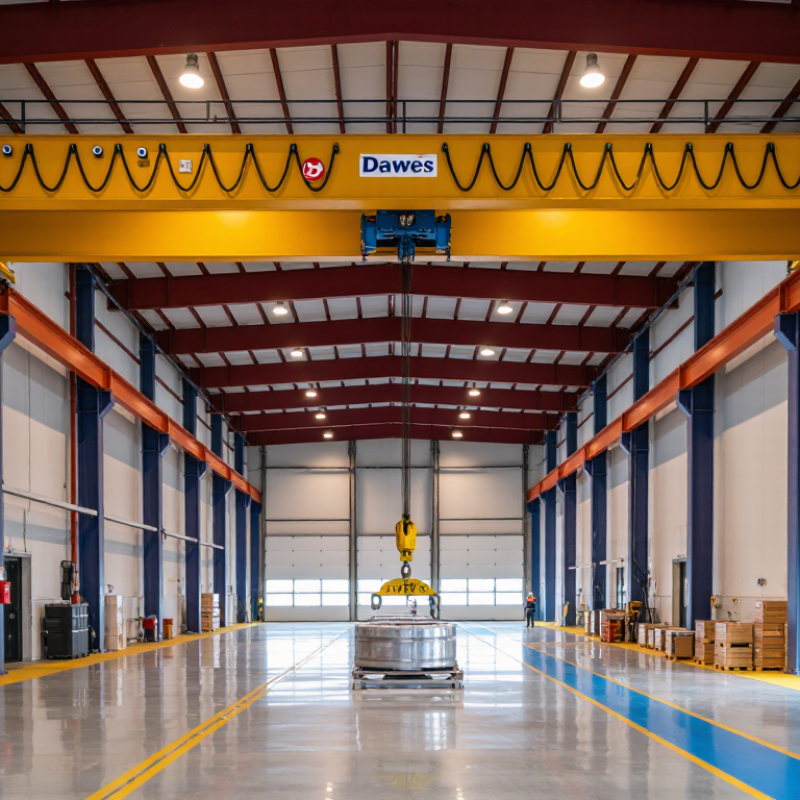
Global sourcing starts with the crane’s working profile, not its advertised lifting limit. Overhead bridge cranes suit factories with fixed production lanes. Gantry cranes fit open yards and temporary loading zones. Jib cranes handle short-radius workstation lifting. Monorail systems move loads along one defined route. Each type changes installation cost, headroom, and maintenance access.

Capacity needs a real calculation. Record the heaviest load, lifting attachments, load center, span, lift height, and daily cycles. Add a controlled safety margin, but avoid excessive oversizing. A larger crane can increase steelwork, power demand, and transport costs. ISO 4301-1 classifies cranes by total service time and load spectrum. This matters more than a single maximum-capacity figure. A 10-ton crane used occasionally may need a different duty class from a 5-ton crane operating continuously.

Operating features deserve equal attention. Variable-speed drives can improve positioning near fragile cargo. Dual lifting speeds help when loads enter containers or narrow racks. Outdoor cranes need wind monitoring, weather protection, and effective braking. Indoor systems may prioritize low headroom and reduced wheel loads.

The International Labour Organization’s safety reports show that work-related harm remains a major global concern, so emergency stops, overload protection, inspection access, and operator visibility should be specified early. In practical sourcing reviews, buyers sometimes compare only price and capacity. That approach fails too often. Verify test certificates, local service capability, spare-part lead times, and compatibility with regional power standards. Some specifications will still need revision after the site survey. That is normal.

Evaluate Safety Standards, Certifications, and Quality Controls

When choosing the right crane for global sourcing, safety evidence should guide the decision. Do not rely on product photos or a low quotation. Ask for the crane’s rated load chart, operating limits, inspection records, and maintenance instructions.

Check whether the design follows recognized standards applicable to the destination market. Certification should identify the exact model, manufacturer, testing scope, and issue date. Confirm it with the issuing organization when possible.

A certificate covering a similar model is not enough. Review emergency stops, overload protection, limit switches, braking systems, guarding, and control labels. These details matter during real lifting work.

Quality control must continue beyond final assembly. Request material certificates for load-bearing parts, weld inspection reports, dimensional records, and functional test results.

A factory audit can reveal weak storage practices, unclear calibration routines, or rushed inspections. Ask how rejected components are separated and traced.

During one sourcing review, the paperwork looked complete, but a test gauge had expired calibration. That small gap changed the approval decision.

It also showed why documents need physical verification. Independent pre-shipment inspection and witnessed load testing add useful protection, although they cannot replace competent operators and planned maintenance.

Safety is never proven by paperwork alone.

Assess Suppliers, Lead Times, Pricing, and International Logistics

When sourcing a crane internationally, supplier assessment should begin with evidence, not polished brochures. Request factory photographs, test records, material certificates, and recent export references. Speak with an engineering contact, not only a sales representative. Ask how the crane performs under your actual conditions, including lifting capacity, duty cycle, temperature, and available power. Small details matter. I once saw a quotation omit runway dimensions, creating an expensive redesign later. That mistake was avoidable.

Confirm whether the quoted lead time covers design approval, fabrication, inspection, packing, and dispatch. Get each milestone in writing. A realistic schedule is more useful than an attractive promise. Compare total landed cost, not only the equipment price. Include inland transport, ocean freight, insurance, duties, installation, commissioning, spare parts, and future maintenance. The cheapest offer can become the costliest. Ask about currency, payment terms, warranty exclusions, and price validity. Keep a contingency budget for changes.

International logistics require careful preparation. Request packing dimensions, gross weights, lifting points, center-of-gravity details, and container requirements before ordering. Select shipping terms that clearly assign transport risks and documentation duties. Use an independent inspection before final payment, especially for complex steel structures or electrical systems. Verify export documents, serial records, manuals, and destination-country compliance requirements. Delays often come from missing paperwork, not manufacturing. I would also test the communication process early. If technical questions receive vague answers, future support may be difficult. A supplier can be experienced yet still poorly organized for your route.

How to Choose the Right Dawes Crane for Global Sourcing? - Assess Suppliers, Lead Times, Pricing, and International Logistics
Supplier Profile Crane Configuration Rated Capacity Span / Lifting Height Duty Classification Indicative Unit Price
(USD, FOB)
Standard Production Lead Time Typical Ocean Transit
(Excluding Customs)
Recommended Incoterm Payment Structure Factory Audit Result Export Documentation Estimated Logistics Risk Overall Sourcing Score
Profile 01 Single-girder electric overhead travelling crane with wire-rope hoist 5 metric tons 12 m span / 6 m lift FEM 2m / ISO M5 $8,500–$12,500 35–45 calendar days 25–38 days to major European ports FOB or CIF 30% deposit; 70% before shipment Passed; documented load-test procedure Commercial invoice, packing list, bill of lading, certificate of origin, test certificate Low 87 / 100
Profile 02 Double-girder electric overhead travelling crane with cabin or pendant control 20 metric tons 20 m span / 9 m lift FEM 3m / ISO M6 $34,000–$52,000 55–75 calendar days 30–45 days to North American ports FCA or CIF 30% deposit; balance against pre-shipment inspection Passed with corrective actions on paint thickness control Includes structural drawings, test records, electrical schematics, and origin documents Medium 84 / 100
Profile 03 Low-headroom single-girder crane with variable-frequency drive 3.2 metric tons 10 m span / 5 m lift FEM 2m / ISO M5 $7,200–$10,800 30–40 calendar days 22–35 days to Southeast Asian ports EXW or FOB 20% deposit; 80% before shipment Passed; strong electrical panel inspection records Standard export documents; digital manuals supplied in English Low 82 / 100
Profile 04 Outdoor double-girder crane with weatherproof controls and rain cover 35 metric tons 25 m span / 12 m lift FEM 4m / ISO M7 $68,000–$96,000 75–100 calendar days 35–55 days to Middle Eastern ports CIF or DAP by negotiated route 30% deposit; 60% before shipment; 10% after commissioning Conditional approval; inspection recommended before dispatch Requires confirmation of corrosion-protection specification and spare-parts list Medium 79 / 100
Profile 05 Explosion-protected overhead crane for hazardous industrial areas 10 metric tons 16 m span / 8 m lift FEM 3m / ISO M6 $42,000–$68,000 80–110 calendar days 30–50 days to Northern European ports FCA or CIF 40% deposit; 50% after factory acceptance test; 10% before shipment Passed; hazardous-area documentation must match destination rules Requires conformity documents, hazardous-area certificates, FAT report, and traceability records Medium 86 / 100
Profile 06 Light-duty workstation bridge crane with modular aluminum or steel runway 1 metric ton 8 m span / 4 m lift FEM 1Am / ISO M4 $4,800–$8,000 25–35 calendar days 20–32 days to East Asian ports FOB 30% deposit; 70% against shipping documents Passed; assembly instructions require localization review Invoice, packing list, origin certificate, operating manual, and spare-parts schedule Low 80 / 100
Profile 07 Process crane with auxiliary hoist, load monitoring, and remote diagnostics 50 metric tons 28 m span / 15 m lift FEM 4m / ISO M7 $115,000–$175,000 100–140 calendar days 40–60 days to South American ports CIF or DAP 20% deposit; milestone payments linked to design, fabrication, and FAT Pending; third-party inspection strongly recommended Requires approved drawings, welding records, FAT documentation, and commissioning plan Medium 81 / 100
Profile 08 Compact monorail hoist crane for low-clearance workshops 2 metric tons 6 m span / 3.5 m lift FEM 2m / ISO M5 $5,600–$9,200 28–38 calendar days 22–36 days to Australian ports FOB or CFR 30% deposit; 70% before shipment Passed; verify local electrical plug and control-voltage requirements Standard export pack with English operating and maintenance manuals Low 83 / 100

Note: Price ranges are indicative budget benchmarks for standard configurations in USD and can vary according to span, lifting height, duty cycle, control system, local compliance requirements, customization, inspection scope, packing, insurance, tariffs, and destination charges. Lead times exclude design approval, port congestion, customs clearance, installation, and commissioning.

Verify Installation Support, Spare Parts, and After-Sales Service

Choosing a crane for global sourcing involves more than lifting capacity and price. Installation support often determines whether equipment starts safely and on schedule. Ask who supervises assembly, tests controls, and trains operators at your facility. Request a written installation scope, including travel coverage, commissioning steps, and acceptance records. Remote guidance can help, but it cannot replace a qualified technician for complex installations. That lesson is easy to underestimate.

Spare-parts planning deserves equal attention. Confirm which components are standard, locally available, and supported for several years. Ask for a parts list with codes, prices, lead times, and storage recommendations. Critical items may include brake linings, contactors, limit switches, wire ropes, and control modules. Check whether diagrams match the delivered crane. Small mismatches create expensive delays. I have seen purchasing teams focus on the initial quote, then discover that one sensor requires weeks to ship. The mistake was preventable, though not always obvious.

Tips: Test the service process before signing. Send three realistic fault examples and measure response time. Verify service hours, escalation contacts, warranty exclusions, and training materials. Ask for references from similar sites, preferably in your region. Keep every promise in the contract. Also, inspect the maintenance schedule against dust, humidity, temperature, and shift patterns. A polished service brochure is useful, but field evidence matters more. Leave room for doubt; after-sales promises should be verified, not simply trusted.

How to Choose the Right Dawes Crane for Global Sourcing?

This procurement framework prioritizes the service factors that most directly affect crane commissioning, uptime, and long-term operating cost. Installation support, spare-parts availability, and after-sales response should be verified before placing an international order.