Choosing the best crane truck in 2026 begins with the work it must perform, not the largest number on a brochure. Grand View Research estimated the global crane market at USD 33.6 billion in 2023 and projected 4.4% annual growth through 2030. That figure covers cranes broadly; it is not a forecast for crane trucks alone. The U.S. Census Bureau reported 2024 construction spending of approximately USD 2.154 trillion. Together, these reports show a substantial equipment market, but they cannot tell you which truck suits your site.
Start with the load chart, then check the actual lift radius, required boom height, and available setup space. A 10-ton load close to the truck can demand a very different configuration from a lighter load at full reach. Check chassis payload after fitting the crane, stabilizer footprint, road access, and the space needed to deploy outriggers. Fit matters more.
Compare hydraulic capacity, control systems, maintenance access, parts availability, and expected duty cycles. Ask dealers for configuration-specific load charts and written service terms. Confirm that quoted capacity reflects the exact crane, chassis, and stabilizer setup—not a similar model. A broad market trend is useful context, but it is not a purchasing recommendation. One caution: a clean specification sheet can still conceal a poor job-site fit. No single crane truck is best for every operator. The right choice balances safe lifting capacity, daily usability, operating costs, and support after delivery.
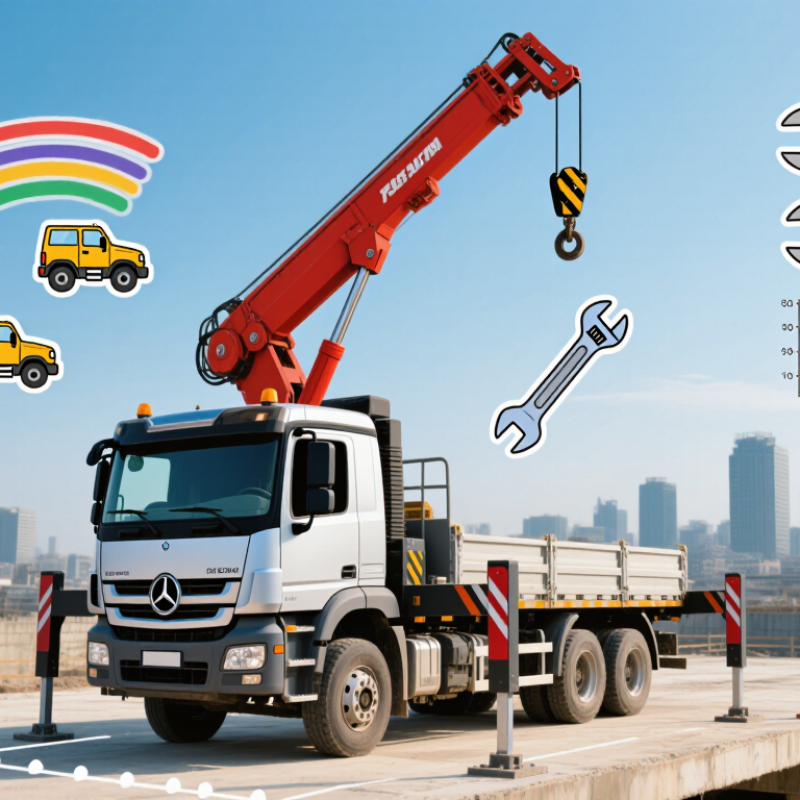
Before comparing lifting capacity, map the truck’s real work cycle. Will it unload pallets beside a road, place roof trusses over a house, or move materials across a muddy site? Record the heaviest load, its pickup and set-down points, and the maximum working radius. A load that seems manageable near the truck can exceed capacity when the boom reaches farther. Measure the setup space, too: parked cars, overhead wires, soft shoulders, and tight gates can rule out an otherwise suitable truck.
Conditions change the choice. Note ground slope, soil firmness, typical wind, traffic, and how often the truck must travel between sites. The U.S. Bureau of Labor Statistics’ 2023 Census of Fatal Occupational Injuries recorded 1,075 construction fatalities, with a rate of 9.6 per 100,000 full-time-equivalent workers. This is not a crane-truck-specific measure, but it underlines why stable setup and clear work zones matter. Details matter. Check the load chart for the planned outrigger position and boom configuration; never assume full extension is available on every surface.
Then match the truck to the site, not an idealized job. Confirm that the operator can see the load, that outriggers can fully deploy, and that the route allows safe turning with the boom stowed. Ask crews to describe their awkward lifts, not just typical ones. Their estimates may be imperfect—and worth challenging against measured load weights. A quick site visit can expose a mismatch before purchase.
Choosing a crane truck starts with the lift, not the boom length. Knuckle-boom cranes fold compactly for delivery work, while stiff-boom and telescopic models suit different reach and setup needs. Compare load charts at the actual working radius: a 2-ton load lifted close to the truck may be feasible, while the same load farther out can exceed capacity. Stabilizer spread, ground conditions, and overhead clearance matter, too. Small details change the job.
Chassis choice is just as important. Check payload after adding the crane, body, tools, and crew; then confirm axle ratings, frame strength, and center-of-gravity effects with a qualified upfitter. FHWA’s federal limits generally set 20,000 pounds for a single axle and 34,000 pounds for a tandem axle, subject to the Bridge Formula and applicable route rules. These are roadway limits, not a substitute for the truck’s rated capacity. They help explain why axle layout and legal operating weight belong in the comparison.
Tips: Ask for a completed-vehicle weight estimate and a load chart for your exact configuration. Test the setup on a representative site. That step is easy to skip—and costly to regret.
Sources: FHWA, 23 CFR 658.17; OSHA, 29 CFR 1926 Subpart CC.
| Crane Truck Type | Typical Rated Capacity* | Reach and Lifting Profile | Common Chassis | Best-Fit Configuration | Advantages | Considerations |
|---|---|---|---|---|---|---|
| Service truck with telescopic crane | Approximately 1–10 tonnes | Short to moderate reach; capacity decreases as boom extension and working radius increase. | Light- or medium-duty truck, selected to suit crane weight, tools, and payload. | Compact chassis with a rear- or body-mounted crane and stabilizers. | Combines lifting with tool and parts storage; useful for maintenance and field service. | Storage, passengers, crane, and payload all count toward the truck’s allowable weight. |
| Knuckle-boom (loader) crane truck | Roughly 1–30+ tonnes, depending on crane size and rating method | Articulated boom folds compactly; some models offer reach over or around obstacles. | Medium- or heavy-duty chassis; heavier cranes may require a multi-axle truck. | Crane behind the cab or at the rear, with stabilizers matched to the load chart. | Versatile loading and unloading; can often stow compactly for road travel. | Capacity varies with boom position, extension, attachment, and stabilizer deployment. |
| Stiff-boom crane truck | Commonly about 1–10 tonnes | Direct, relatively simple boom movement; generally suited to straightforward lifts near the truck. | Light- or medium-duty chassis, depending on crane and cargo requirements. | Body-mounted crane with a practical cargo deck and correctly sized outriggers. | Simple layout and useful for regular loading tasks with predictable lift locations. | Less flexible around obstacles than an articulated boom; working radius still limits capacity. |
| Boom truck (truck-mounted telescopic crane) | Often about 10–100 US short tons (approximately 9–91 tonnes) | Telescopic boom provides substantial reach; lifting capacity changes considerably with radius and boom angle. | Typically a heavy-duty commercial chassis; axle count depends on crane size and road limits. | Dedicated crane carrier with outriggers; some units include a personnel platform or jib. | Good choice for construction, equipment placement, and frequent road travel between sites. | Requires suitable setup space and a firm, level support area; verify transport and axle weights. |
| Heavy truck-mounted crane | Approximately 30–100+ tonnes for larger configurations | Designed for heavier lifts; long boom systems and optional extensions may increase working reach. | Heavy multi-axle chassis, often with a dedicated carrier configuration. | Crane, counterweight, and outrigger setup specified for the planned lift and travel route. | Handles demanding construction and industrial lifts while remaining road-mobile. | Higher transport, setup, ground-bearing, permitting, and operator-planning requirements. |
| Compact crane truck | Typically about 1–5 tonnes | Short to moderate reach; compact dimensions favor access to confined work areas. | Light-duty or compact commercial chassis, subject to local weight limits. | Short wheelbase with a small crane and stabilizers suited to restricted sites. | Easier to maneuver and park in urban areas or smaller job sites. | Limited payload and lift capacity; confirm site access, axle loads, and stabilizer footprint. |
Selection note: Capacity figures are broad market ranges, not guaranteed lifting capacities. Always use the specific crane’s load chart and confirm rated capacity at the actual working radius, boom length, stabilizer position, attachment, and ground conditions. Check the truck’s gross vehicle weight rating, axle ratings, payload, and applicable local road regulations before purchase.
Choosing a crane truck starts with the heaviest load, but the hook weight is only part of the calculation. Add slings, lifting attachments, and any material that will remain on the load. Then check the load chart for the planned boom length and working radius. Rated capacity can drop quickly as the boom extends. Measure the pick. A 1,500-kilogram load near the truck may be within capacity, while the same load across a driveway may not be. Confirm the exact configuration in the manufacturer’s chart rather than relying on a headline capacity.
Boom reach must cover the pickup and set-down points without forcing the truck into a poor position. Stability matters just as much. Check that outriggers can extend fully and rest on firm, level ground; soft shoulders or buried voids can change the setup. Use suitable support pads where the ground requires them, and account for nearby traffic, walls, and overhead obstructions. One detail is easy to underestimate: the jobsite rarely matches the neat sketch. Recheck clearances and ground conditions before lifting, and revise the setup if the actual reach or load differs from the plan.
When choosing a crane truck in 2026, inspect its safety systems under realistic working conditions. Check the load-moment indicator, anti-two-block device, emergency stop, outriggers, and visible load charts. Ask how alarms behave on uneven ground, not just during a showroom demonstration. OSHA estimated its 2010 crane rule could prevent 22 fatalities and 175 injuries each year. That estimate highlights why safety features and work procedures belong in the same evaluation. A warning system helps, but it cannot correct poor setup.
Review the applicable regulations before comparing lifting capacity. In the United States, OSHA construction rules require covered crane operators to be certified or qualified, and employers must evaluate operators for the equipment they use. Confirm credentials, practical experience, and familiarity with the truck’s controls. Check inspection records, maintenance history, and whether the proposed configuration matches the manufacturer’s load chart. In other regions, verify local requirements rather than assuming US rules apply. Small details matter: a firm outrigger pad, clear hand signals, and a level setup can change a lift’s risk. Still, paperwork can mislead; I would want to see the equipment inspected and the operator explain the lift plan.
Source: OSHA, Cranes and Derricks in Construction rulemaking estimate; 29 CFR 1926.1427.
Price a crane truck as a working system, not just a chassis and lifting chart. Include financing, fuel, tires, inspections, hydraulic repairs, training, insurance, and resale value. ATRI’s 2024 Operational Costs of Trucking report estimated average U.S. trucking costs at $2.27 per mile in 2023. That benchmark is not crane-specific, but it shows how small running-cost differences can compound. Run your own duty-cycle estimate.
Service support matters when a truck misses a lift window. Ask for documented response times, local technician coverage, parts availability, and maintenance intervals. Track downtime by cause; a hydraulic leak, sensor fault, and delayed part should not share one vague cost line. Telematics can record engine hours, fault codes, fuel use, and PTO activity. Keep the data practical. Connectivity alone does not prevent downtime.
Compare technology by what crews can verify on site: load-moment alerts, camera visibility, remote diagnostics, and clear service records. Check that controls work with gloves and remain readable in rain or glare. Include software subscriptions, calibration, training, and replacement sensors in your ownership estimate. I still find resale assumptions slippery; local demand and crane configuration can change them sharply. Test estimates against a season of actual fuel, service, and downtime records.