
10 Tips for Choosing a Portable Tower Crane
Choosing a portable tower crane is not simply a matter of comparing lifting capacity and rental prices. The right machine must fit the site, the ground, the load path, and the people operating it. A compact crane may look ideal beside a narrow building entrance, yet limited setup space can create serious planning problems. Small details matter.
Crane safety consultant Mark Bridger offers a practical reminder: “The load does not care how confident the operator feels.” That sentence deserves attention. Experience on busy construction sites shows that confidence cannot replace verified calculations, competent supervision, or daily equipment checks. Before selecting a portable tower crane, examine its maximum radius, rated capacity, transport dimensions, assembly method, power requirements, and wind limitations. Ask where the outriggers or base supports will stand. Check the soil, nearby structures, overhead services, and delivery route. These are not glamorous questions.
The following ten tips focus on decisions that often appear minor but affect productivity and safety. They consider real working conditions, not only catalogue specifications. A crane that performs well on a level concrete slab may struggle on uneven ground. A model with greater reach may also demand more counterweight and preparation. That trade-off is easy to miss.
No checklist is perfect. Site conditions change. Weather changes faster. Use these recommendations with current manufacturer instructions, qualified lifting professionals, and applicable local requirements. If a choice feels uncertain, pause and verify it. That pause may be inconvenient, but rushed crane selection can become far more expensive.
Define the Project Requirements and Site Conditions
10 Tips for Choosing a Portable Tower Crane
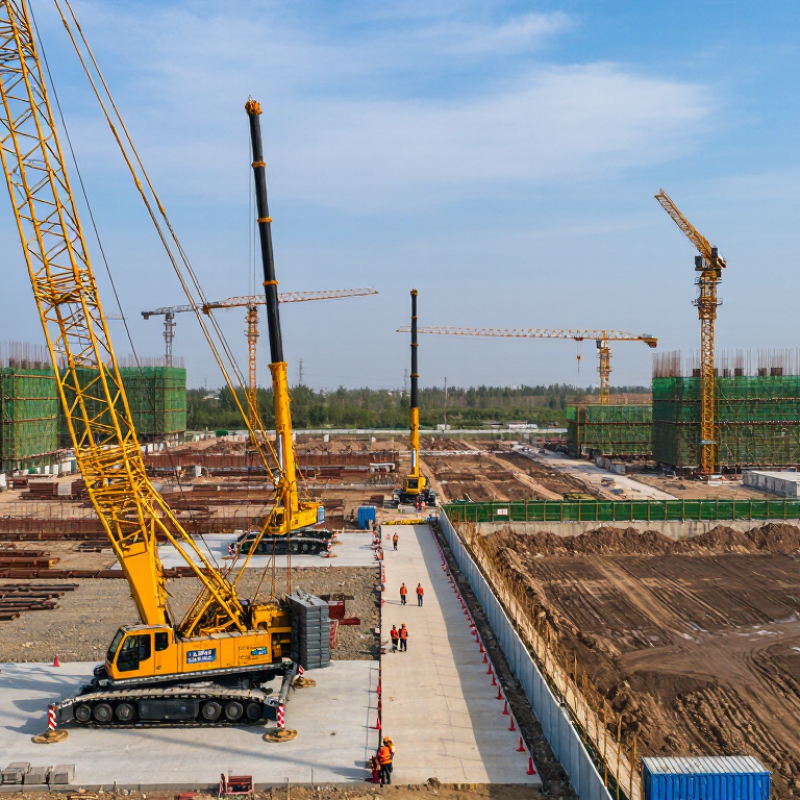
Define the project requirements and site conditions before comparing crane models. Record the heaviest load, lifting radius, hook height, duty cycle, and expected construction sequence. A portable tower crane may lift efficiently, but portability does not mean unlimited capacity. Check the manufacturer’s load chart at the actual working radius, not only its maximum rating.
Survey the ground carefully. OSHA’s crane rulemaking analysis identified an average of 82 crane-related fatalities annually between 2003 and 2008, highlighting the importance of stable setup conditions. Confirm soil bearing capacity, slab strength, drainage, and underground utilities. Do not guess. A compact site can still require substantial mats, anchors, or temporary foundations. Also measure overhead lines, neighboring structures, traffic routes, and restricted swing areas. Small errors matter.
Wind exposure deserves special attention. Tall buildings, open lots, and coastal locations can create changing wind pressures. Use the project’s local wind criteria and the crane’s approved operating limits. Plan transport access, assembly space, power supply, and emergency lowering procedures before delivery. I would also question optimistic schedules; repeated repositioning can erase the time saved by choosing a smaller crane. Site records should be reviewed by a qualified engineer and updated when ground or building conditions change.
10 Tips for Choosing a Portable Tower Crane - Define the Project Requirements and Site Conditions
| No. | Project Requirement | Key Site or Load Data | Recommended Selection Criteria | Example Planning Range | Practical Check Before Rental or Purchase |
|---|---|---|---|---|---|
| 1 | Define the maximum lifting capacity | Heaviest load, lifting radius, load shape, and lifting accessories | Check both maximum rated capacity and capacity at the required working radius | Typical portable units may range from approximately 1 to 10 tonnes maximum capacity, depending on configuration | Create a load chart showing the heaviest and most frequent lifts. Include the weight of slings, spreader beams, hooks, and other rigging equipment. |
| 2 | Determine the required working radius | Horizontal distance from the crane center to the pick-up and set-down points | Select a jib length and load chart that safely cover the farthest lifting point | Common portable tower crane working radii may be about 20–50 m, subject to model and configuration | Measure the full work zone on a scaled site plan. Allow clearance for structures, vehicles, temporary works, and restricted areas. |
| 3 | Confirm required hook height | Building height, delivery-floor elevation, lifting depth, and required headroom | Choose a tower height and telescoping or climbing arrangement that meets the highest lift | Many compact systems provide approximately 20–40 m of hook height, with greater heights possible through approved configurations | Identify the highest pick and landing points, then add clearance for load control and safe operation near roofs or structural edges. |
| 4 | Assess ground bearing capacity | Soil type, allowable bearing pressure, slope, drainage, and underground voids | Verify outrigger reactions, support-pad dimensions, and leveling requirements with a competent engineer | Required ground pressure varies significantly; temporary mats may be needed on weak or variable ground | Obtain geotechnical information where necessary. Inspect for basements, drains, service ducts, recently backfilled areas, and soft shoulders. |
| 5 | Check transport and access limitations | Road width, gate dimensions, turning radius, overhead obstacles, and delivery vehicle limits | Select a crane that can arrive in transportable sections and be assembled within the available access route | Transport modules may require clear routes approximately 3–4 m wide, depending on the equipment used | Complete a route survey covering bridge limits, gradients, overhead lines, narrow turns, traffic controls, and unloading space. |
| 6 | Evaluate setup and dismantling space | Assembly footprint, mobile crane access, component laydown area, and exclusion zones | Prefer a configuration that minimizes auxiliary lifting and reduces setup time on constrained sites | Setup areas commonly need several metres of clear working space beyond the crane base and component footprint | Reserve a firm, level assembly area. Confirm where sections will be stored and how personnel will be kept outside lifting zones. |
| 7 | Review wind and weather exposure | Local wind conditions, coastal exposure, building wind tunnels, rain, ice, and lightning risk | Use the manufacturer’s operating and out-of-service wind limits; never exceed rated conditions | Operating wind limits are equipment-specific and are often around 10–14 m/s; confirm the exact load-chart limit | Install an anemometer where required, define weather stop-work procedures, and plan how the jib will be secured when unattended. |
| 8 | Identify power and fuel requirements | Available voltage, phase, electrical capacity, backup power, or emissions restrictions | Match the crane’s electrical or engine system to the site supply and local environmental requirements | Electric systems commonly require three-phase site power; exact voltage and current depend on the configuration | Confirm connection points, cable routing, protection devices, generator capacity, noise limits, and emergency shutdown arrangements. |
| 9 | Check overhead and underground hazards | Power lines, telecom cables, adjacent buildings, buried utilities, and public access areas | Select a crane and operating plan that maintain legally required clearances and controlled slew limits | Clearance distances are jurisdiction-specific; establish them through a documented lift plan and site survey | Use utility drawings, locating equipment, physical barriers, signage, and slew restriction systems where applicable. |
| 10 | Verify compliance, inspection, and operator needs | Local regulations, inspection certificates, operator qualifications, maintenance records, and lift-plan requirements | Choose equipment that can be legally operated and supported by qualified personnel and documented procedures | Inspection frequency and operator requirements vary by jurisdiction, crane type, and site risk level | Request current inspection records, manuals, load charts, emergency procedures, maintenance history, and proof of operator competence. |
Note: All capacity, radius, height, wind, electrical, and clearance values must be confirmed against the selected crane’s current load chart, technical manual, site assessment, and applicable local regulations.
Related Posts
-

How to Choose the Best Portable Tower Crane for Your Project?
-

Top Portable Tower Crane Options for Global Buyers?
-
What is a Portable Tower Crane and How Does It Work?
-
China Top 10 Luffing Crane Manufacturers for Global Buyers
-

Top 10 Mobile Tower Crane Models for Global Buyers?
-

Best 10 Crane Rentals for Your Next Big Project?